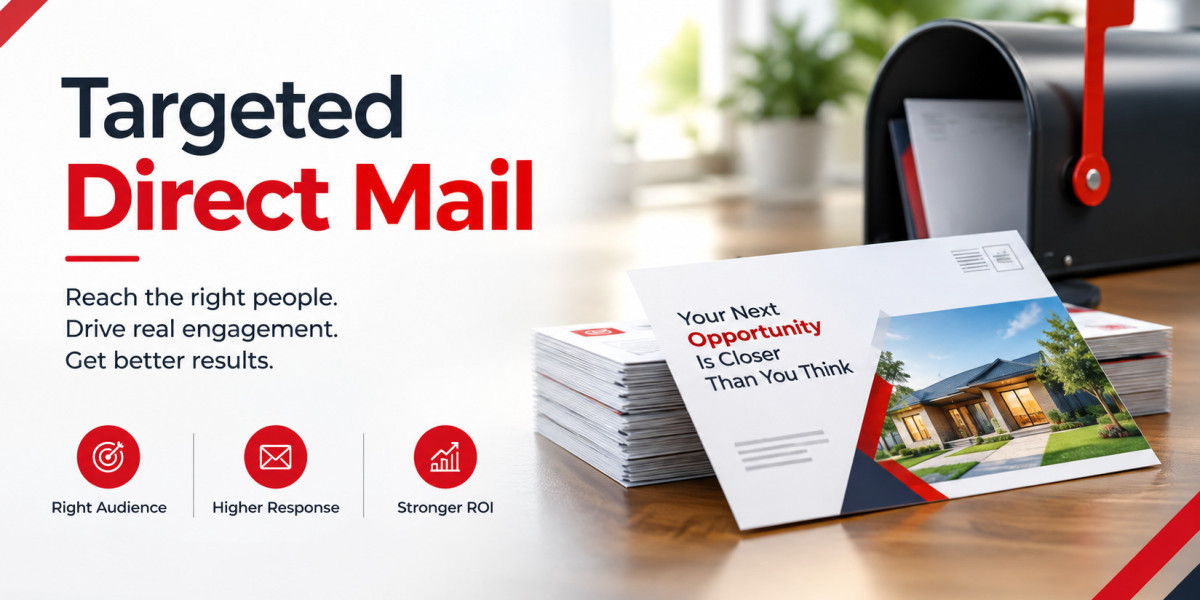

Brand awareness rarely grows because a customer sees a business name once. People usually need repeated, relevant exposure before they recognize a company, understand what it offers, and remember it when a need finally appears. Local businesses often struggle with this because they spread their marketing across broad audiences that may never become realistic customers.
A well-planned Targeted Direct Mail campaign takes a different approach. Instead of sending the same message everywhere, businesses can focus their print budget on households or companies that fit their geographic, demographic, behavioral, or customer-profile criteria.
We have seen that distinction matter in real campaigns. Brand awareness becomes more useful when the right people repeatedly encounter the same business identity, message, and offer rather than when a company simply reaches the largest possible number of addresses.
Why Targeted Direct Mail Strengthens Brand Awareness
Brand awareness means more than recognizing a logo. Customers also need to connect that identity with a service, location, product category, or problem the business can solve.
Targeted direct mail can support that connection because businesses control both the audience and the physical message. The company chooses where the piece goes, what information it communicates, and how consistently recipients encounter the brand over time.
Relevance Helps People Remember The Brand
A household usually pays more attention to information that relates to its situation. A homeowner may notice a roofing or landscaping message more readily than someone who rents an apartment. A local business owner may notice commercial printing, accounting, or facility services that match daily operational needs.
That does not mean targeting guarantees attention. It means the campaign removes obvious mismatches and gives the message a better reason to matter.
When relevance and brand consistency work together, recipients have a clearer opportunity to associate the company with a specific need.
Physical Mail Creates Another Brand Touchpoint
Businesses often rely heavily on search, social media, email, or display ads. Those channels can support awareness, but customers may never see every digital message a company publishes.
Direct mail adds another touchpoint without requiring someone to follow the business, join an email list, or search for the service first. The recipient encounters the brand directly in the mailbox.
We usually recommend treating print as part of the wider marketing system rather than as a replacement for digital marketing.
Audience Quality Matters More Than Mailing Volume
One of the most common mistakes we see involves measuring a campaign by how many pieces it sends.
A mailing of 20,000 pieces may look more impressive than a mailing of 5,000 pieces, but quantity alone tells us very little about brand-building value. If most recipients live outside the practical service area or have little connection to the offer, the additional reach may add cost without adding useful awareness.
Define The Audience Before Designing The Mailpiece
We prefer to identify the audience before finalizing the creative.
A home service company may focus on homeowners within selected ZIP Codes. A dental office may prioritize households within a realistic travel radius. A B2B provider may need businesses in certain industries or employee-size ranges.
These decisions affect the copy, images, offer, and call to action. Audience strategy should shape creative strategy rather than appear as the final step before mailing.
Remove People Who Do Not Fit The Campaign
Targeting also involves exclusion.
A business may exclude locations outside its service area, existing customers from a prospect-acquisition campaign, unsuitable property types, or records that no longer match the campaign objective.
Removing poor-fit addresses can protect budget and keep brand exposure concentrated among more relevant recipients.
Geographic Targeting Supports Local Brand Recognition
Location often plays a major role in brand awareness for local businesses.
A customer may encounter dozens of businesses online, but proximity can make one company feel more relevant when the need involves dining, healthcare, home services, fitness, automotive work, retail, or another locally delivered service.
Focus On Areas The Business Can Actually Serve
We recommend starting with existing customer geography whenever possible.
Where do customers currently live? Which ZIP Codes generate repeat business? How far do customers typically travel? Which neighborhoods sit inside a profitable service radius?
These questions usually provide a stronger foundation than simply selecting every address within an arbitrary distance.
Build Density Instead Of Scattered Visibility
A business can spread a small budget over a very large area and reach many neighborhoods once. It can also concentrate the same budget within a smaller area and create more repeated exposure.
For awareness campaigns, concentrated visibility often deserves serious consideration.
A recipient who encounters the same recognizable company several times over a reasonable period gains more opportunity to remember the name than someone who receives a single isolated mailpiece.
Use Local Context Naturally
Local references can help the message feel relevant when they serve a real purpose.
A business can mention its location, service area, neighborhood opening, nearby event, local coverage, or regional service need. Those details give the recipient context without forcing location names into every line.
Local relevance should clarify the message rather than function as decoration.
Consistent Design Helps Recipients Recognize The Business
Businesses sometimes redesign every postcard as if each campaign belongs to a different company.
One mailer uses dark colors and bold typography. The next uses pastel colors and a different logo treatment. Another changes the tone, layout, photography, and headline style completely.
Individually, each piece may look attractive. Together, they weaken visual continuity.
Keep Core Brand Elements Stable
We recommend maintaining a recognizable design system across direct mail campaigns.
That system may include the same logo treatment, primary colors, typography, image style, website presentation, and general tone. Individual campaigns can still vary without losing the visual connection between them.
The goal involves helping a recipient recognize the sender before reading every word.
Repetition Should Feel Familiar, Not Identical
Consistency does not require sending the exact same postcard repeatedly.
Businesses can change seasonal photography, offers, supporting copy, or featured services while keeping the main visual language consistent.
Think of each mailpiece as another chapter from the same brand rather than an entirely new identity.
Clear Messaging Builds Stronger Brand Associations
Brand awareness becomes more valuable when people remember what the company actually does.
A recipient may remember a beautiful postcard without remembering the advertiser. That usually means the creative attracted attention but failed to build a clear brand association.
Connect The Business Name With One Main Idea
We recommend identifying one primary message for each mailpiece.
A landscaping company might focus on seasonal lawn preparation. A dental office might focus on family appointments. A moving company may focus on local residential moves.
When the recipient sees the company name beside a clear service category or need, the brand becomes easier to place mentally.
Avoid Trying To Say Everything At Once
Businesses often want to list every product and service because they worry about leaving something out.
That approach can make the mailpiece harder to scan. The recipient sees many competing messages instead of one memorable reason to recognize the company.
A focused message can introduce the brand while the website, landing page, or future mailings provide more detail.
Repeated Direct Mail Can Create Familiarity Over Time
Many businesses expect one mailing to produce both immediate sales and long-term awareness.
Those goals can overlap, but they do not always happen on the same timeline. A homeowner may receive a roofing postcard months before needing a roof inspection. A resident may notice a nearby dental practice long before changing dentists.
The first mailpiece can still contribute value if the customer remembers the business later.
Plan Campaigns As A Sequence
We often recommend thinking beyond a single drop.
A sequence might introduce the business first, reinforce a useful service next, and follow with a seasonal or timely reason to respond later.
Each piece should make sense on its own, but the series should also reinforce the same identity.
Keep Enough Time Between Touchpoints
Sending several nearly identical pieces within a very short period can create waste rather than useful familiarity.
The right cadence depends on the industry, buying cycle, audience, season, and campaign goal.
A restaurant may communicate more frequently than a roofing company because customers make dining decisions far more often than they replace roofs.
New Movers Offer A Useful Brand-Awareness Opportunity
People who move into a new area often need to establish relationships with businesses they previously used somewhere else.
They may need a dentist, restaurant, gym, veterinarian, dry cleaner, landscaper, insurance agent, home service company, or other local provider.
That makes timing especially relevant.
Awareness Can Start Before Immediate Demand
A new resident may not need every local service during the first week.
That does not make early communication irrelevant. A useful introduction can give the household a company name to remember when the need eventually arises.
The business does not need to force an immediate transaction from every mailpiece.
Use A Sequence Instead Of One Welcome Postcard
A planned series gives businesses more opportunities to communicate useful information without cramming everything into one piece.
Our guide to a 90-day new mover sequence explains how businesses can structure repeated communication during the period when new residents establish local buying habits.
The same principle applies beyond new movers: thoughtful repetition can strengthen recognition without turning every touchpoint into aggressive promotion.
Targeted Direct Mail Should Match The Customer Lifecycle
Not every recipient needs the same level of brand introduction.
Someone who has never purchased from the business requires different communication from a repeat customer, former customer, or lead who already requested information.
Prospects Need Recognition And Context
A prospect often needs to understand three things quickly: who the company is, what it does, and why the message relates to them.
We recommend prioritizing clarity over company history.
The mailpiece can provide enough information to establish relevance while directing interested recipients toward a website, phone call, store visit, or another logical next step.
Existing Customers Need Reinforcement
Current customers already know the business name, so direct mail can reinforce the relationship through reminders, useful information, complementary services, loyalty communication, or relevant updates.
These campaigns still build brand awareness, but they strengthen familiarity rather than creating it from zero.
Lapsed Customers Need Reconnection
A former customer may remember the company but no longer think about it regularly.
A carefully timed reactivation mailer can bring the brand back into consideration without treating the recipient like a completely new prospect.
That difference in tone often makes communication feel more appropriate.
Personalization Can Improve Relevance Without Becoming Complicated
Personalization sometimes gets reduced to placing a recipient's first name on the postcard.
Names can help in certain contexts, but meaningful personalization goes deeper. The campaign can adjust content according to location, customer status, purchase history, service category, property type, or another useful factor.
Use Data That Changes The Message
We recommend personalizing only when the data improves communication.
If two audience segments receive exactly the same offer, copy, and imagery, creating separate segments may add unnecessary complexity.
A useful segment should influence what the recipient sees or when the recipient receives it.
Avoid Personalization That Feels Intrusive
Businesses should also consider how detailed targeting appears from the recipient's perspective.
A mailpiece does not need to demonstrate everything the business knows about someone. The message should feel relevant without making the recipient uncomfortable.
Good personalization often works quietly in the background.
Direct Mail And Digital Marketing Can Reinforce The Same Brand
Awareness becomes stronger when customers see a consistent business identity across different channels.
A recipient may receive a postcard today, search the company name next week, notice a social post later, and visit the website when the need becomes urgent.
Each channel can reinforce the previous touchpoint.
Keep Print And Website Branding Consistent
The postcard should not look like one company while the landing page looks like another.
Use compatible colors, typography, messaging, imagery, and offers so the transition from print to digital feels natural.
That visual continuity reassures the recipient that they reached the correct business.
Use QR Codes As A Bridge, Not A Strategy
QR codes can move interested recipients from print to digital content quickly.
However, the QR code itself does not build awareness. The message around it still needs to explain why someone should scan and what they will find.
A clear destination matters more than simply adding a code because space remains available.
Tangible Print Can Support Brand Recall
Printed materials occupy physical space in a way digital ads do not.
A postcard may sit on a counter, desk, bulletin board, or refrigerator if the recipient finds the information useful. That gives the brand an opportunity for repeated exposure beyond the first mailbox interaction.
We do not assume every recipient keeps every mailpiece. Good design simply increases the chance that useful pieces remain visible longer.
Useful Information Can Increase Keeping Value
Businesses can make mailpieces more useful through appointment reminders, service schedules, event dates, seasonal checklists, menus, calendars, local information, or another practical element.
The usefulness should still connect directly to the business.
A mailer should not become a generic giveaway that people remember while forgetting who sent it.
Brand Awareness Campaigns Still Need A Clear Call To Action
An awareness-focused campaign does not need to push every recipient into an immediate purchase.
However, recipients should still know how to learn more when interest appears.
Give Readers One Easy Next Step
That step might involve visiting a website, calling the business, scanning a QR code, visiting a location, or saving the mailpiece for later.
We prefer one obvious primary action over several equally prominent choices.
A simple response path makes the brand easier to engage with when the recipient feels ready.
Keep Contact Details Consistent
Businesses should use the same phone number, website, location information, and brand naming across campaigns whenever practical.
Constantly changing the way the business presents itself creates unnecessary friction.
Consistency helps recipients connect multiple mailings with the same company.
Measurement Matters Even When Awareness Is The Goal
Brand awareness does not always produce an immediate sale that businesses can trace directly to a mailpiece.
That makes measurement more challenging, but not impossible.
Track Direct Responses
Businesses can monitor QR scans, dedicated landing-page visits, calls, coupon codes, store visits, form submissions, appointment sources, and other campaign actions.
These metrics show active response rather than awareness alone.
Still, they give businesses useful information about which messages and audience segments generate engagement.
Ask New Customers How They Heard About The Business
A simple source question can reveal delayed impact.
Someone may receive two postcards, search the company several weeks later, and eventually become a customer without using the QR code or campaign phone number.
Asking how the customer discovered or remembered the business can capture information that direct-response tracking misses.
Compare Geographic Trends
Businesses can also compare customer activity in mailed areas against areas where they did not concentrate the campaign.
This does not prove causation by itself, but it can reveal patterns worth exploring in future mailings.
We recommend combining several indicators rather than relying on one metric.
Common Brand-Awareness Mistakes In Targeted Direct Mail
Direct mail can fail to strengthen awareness when the campaign lacks consistency or strategic focus.
Many mistakes come from treating each mailing as an isolated promotion rather than part of a broader brand-building effort.
Changing The Brand Look Every Campaign
Frequent redesigns make recognition harder.
Campaigns can remain visually fresh while keeping core brand elements consistent.
The recipient should not need to rediscover who sent the mailer every time.
Targeting Too Broadly
Broad reach can dilute both budget and repetition.
If the business serves a limited area or customer type, focus there first.
Targeted recognition among realistic customers usually offers more strategic value than weak recognition among people who may never buy.
Using A Different Message Every Time
A business can promote different offers without constantly changing its core positioning.
If one postcard presents the company as a premium specialist and the next presents it as a bargain provider, recipients may struggle to understand what the brand represents.
Campaign messages should reinforce rather than contradict one another.
Measuring Only Immediate Sales
Not every awareness exposure creates an instant transaction.
If businesses evaluate every mailpiece only by same-week purchases, they may underestimate delayed recognition.
Combine immediate-response data with longer-term customer-source information and repeat exposure.
A Practical Targeted Direct Mail Brand-Awareness Framework
We recommend a straightforward process because complex campaigns do not automatically build stronger brands.
The audience, identity, message, frequency, and measurement plan need to work together.
Step 1: Define The Audience
Decide which households, businesses, customer segments, or geographic areas genuinely matter.
Remove obvious mismatches before spending money on print and postage.
Step 2: Define The Brand Association
Choose what recipients should connect with the business name.
That might involve a service category, local convenience, expertise area, product type, or another clear value proposition.
Keep that association consistent across the campaign.
Step 3: Create A Recognizable Design System
Establish colors, typography, logo placement, photography style, and contact-information treatment.
Use those elements consistently while allowing enough variation to keep future pieces interesting.
Step 4: Plan Multiple Touchpoints
Decide how many mailings make sense for the buying cycle and audience.
Avoid creating a schedule simply for the sake of frequency. Each touchpoint should have a reason to exist.
Step 5: Connect Print With Digital Channels
Make sure websites, landing pages, social profiles, and other channels reflect the same identity and message.
The recipient should experience one brand across every interaction.
Step 6: Measure Response And Recognition
Track direct responses, source information, customer geography, repeat visits, and other useful signals.
Use those findings to improve future audience selection and communication.
Step 7: Refine Without Rebuilding Everything
Change what the evidence suggests needs improvement.
Do not discard the entire visual identity every time one campaign produces weaker results.
Brand awareness grows through consistency as well as improvement.
Frequently Asked Questions About Targeted Direct Mail And Brand Awareness
How Does Targeted Direct Mail Help Build Brand Awareness?
Targeted direct mail puts a consistent business identity in front of selected households or companies that fit the campaign's geographic or customer criteria. Repeated, relevant exposure can help recipients connect the company name with a particular service, product, location, or need. Targeting also helps businesses concentrate awareness efforts among more realistic potential customers.
How Often Should Businesses Send Direct Mail For Brand Awareness?
The right frequency depends on the industry, buying cycle, audience, season, and budget. Businesses with frequent purchase cycles may communicate more often than companies that sell high-value services customers need only occasionally. We recommend planning a sequence around useful communication rather than sending mail simply to maintain a schedule.
Does Targeted Direct Mail Need A Discount Offer?
No. Brand-awareness mail can introduce a business, explain a service, share useful information, announce a location, provide seasonal guidance, or remind existing customers about relevant services. Discounts can support certain campaigns, but businesses should use them only when they fit the objective and customer relationship.
How Can A Business Measure Brand Awareness From Direct Mail?
Businesses can combine direct-response tracking with broader indicators. QR scans, calls, landing-page visits, coupon use, appointments, customer-source questions, branded searches, and geographic customer patterns can all provide useful information. No single metric captures every delayed awareness effect, so we recommend reviewing several signals together.
Conclusion
Targeted direct mail can strengthen brand awareness when businesses focus on the people who have a realistic reason to remember the company. Better audience selection, geographic concentration, consistent design, focused messaging, useful repetition, and coordinated digital experiences can turn individual mailpieces into connected brand touchpoints.
We recommend thinking beyond the immediate transaction. A recipient may not need the service today, but a clear and consistent campaign can help the business become familiar before that need appears. The value of targeting lies in building that familiarity among relevant people rather than chasing the largest possible audience.
At MailProsUSA, we approach targeted mailing as part of a broader marketing process that includes audience strategy, creative consistency, print production, mailing, and measurement. Before planning the next campaign, businesses can benefit from defining exactly who should remember the brand, what they should remember about it, and how each mailing will reinforce that association.