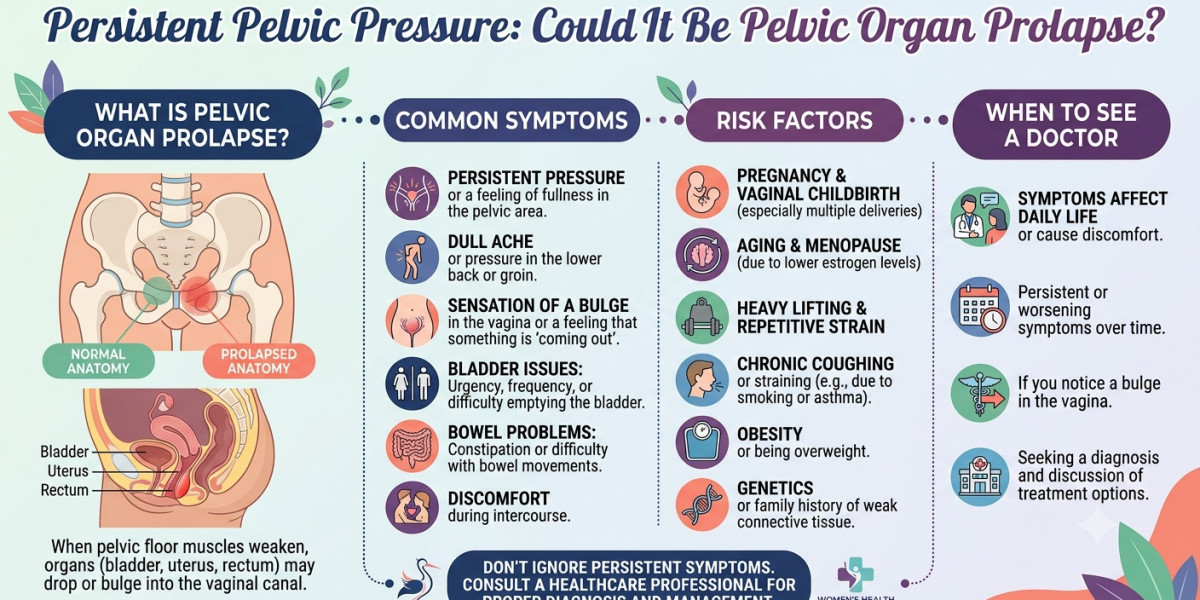

It starts quietly. A vague sense of fullness. A dragging weight in your pelvis that seems to get heavier the more you’re on your feet.
For a lot of women, this becomes their new normal. They blame it on getting older. Or maybe those extra kilos they picked up over the years. Or they just shrug and say, “Well, I had kids.” So they adjust. They stop going for long walks. They hesitate before picking up their grandchild. They lie down more often, hoping the dull ache will just fade. But it doesn't.
This heaviness is often the first real clue your body is giving you about something called Pelvic Organ Prolapse (POP). In my clinic, the first thing I usually hear from women is, “I didn't know what was happening to me.” They feel confused. Sometimes embarrassed. They don’t know who to ask or what to even call it. The truth is, POP is incredibly common. And most importantly—it is highly treatable.
So, What Actually Holds Everything Together?
Let’s talk anatomy, but keep it simple. Your pelvic floor is basically a sling of muscles running from your pubic bone to your tailbone. It holds your bladder, your uterus, and your bowel in place. It’s reinforced by ligaments—think of them like natural ropes keeping everything suspended.
But life happens. Pregnancy, childbirth, chronic coughing, heavy lifting, or just the natural aging process—these things stretch and weaken that hammock. When those muscles can no longer keep the organs lifted, gravity takes charge. The organs start to descend, or "drop," into the vaginal canal. This doesn't happen overnight. It creeps up on you over months, sometimes years. Recognizing this isn't a mystery disease; it's a structural issue. That's the first step to fixing it.
It’s Not Just Heaviness. Look for These Clues.
Many women tell me it feels like they are "sitting on a small ball." Or they feel a bulge that seems more obvious after a long day of standing. But the symptoms aren’t always just about pressure.
Keep an eye out for these specific issues:
Bladder troubles: You feel like you can't empty your bladder completely, or you have to strain to go. Sometimes, there’s urine leakage.
Bowel changes: Constipation gets worse, or you feel like you aren’t finishing your bowel movements.
Lower back pain: A persistent ache in your lower back that actually disappears when you lie flat.
Here is a key rule of thumb: If your symptoms get worse when you stand or strain, and they get better when you lie down, that is a major red flag for prolapse. Don't brush it off.
Why You Can’t Diagnose This Yourself
Here’s the thing about prolapse it has grades. Stage I is mild. Stage IV means the organ is completely outside the vaginal opening. You cannot know which stage you are dealing with by just “feeling around.”
You need a physical exam. A specialist needs to see exactly which wall of the vagina is affected—is it your bladder (anterior), your rectum (posterior), or your uterus (apical)? They also need to rule out other issues like fibroids or cysts that could be causing similar pain.
If you are looking for a Gynecologist in Lajpat Nagar New Delhi, make sure they are doing a thorough job. It’s not a quick five-minute exam. They should talk to you about your daily routine, check your pelvic floor strength manually, and explain exactly what they see. It’s a conversation, not a lecture.
So, What Can You Actually Do About It?
The treatment plan depends entirely on how severe the prolapse is and—very importantly—your lifestyle.
We always start with the least invasive route. For mild cases, pelvic floor physiotherapy (Kegel exercises) can be a game-changer. But most women do Kegels wrong. You need proper guidance on how to contract and, crucially, how to relax those muscles. We might also fit you for a vaginal pessary—it’s a small silicone device that fits inside to prop the organs up. It’s removable, washable, and gives immediate relief without surgery.
For more advanced stages, or if the prolapse is seriously affecting your quality of life, surgery might be the best route. These aren't the scary, major operations of the past. Modern repairs are often done vaginally or laparoscopically (keyhole). We use your own tissues or synthetic mesh to rebuild that support.
When you’re consulting the Best Gynecologist in Lajpat Nagar New Delhi, they won’t push you into an operating room. A good doctor will ask about your daily life. Do you play sports? Do you plan to have more kids? Your age matters. Your goals matter. The choice is tailored to you, not a standard protocol.
Let’s Cut the Embarrassment
Honestly, the biggest hurdle I see isn't the severity of the prolapse—it's the hesitation. Women wait years. They convince themselves it's just a normal part of aging. They think nothing can be done.
That is just not true.
Sitting in silence and "waiting to see" only makes things worse. The muscles get weaker. The bulge gets bigger. And your life gets smaller as you avoid the activities you love.
If you are feeling that persistent pressure, speak up. It isn't in your head. It is a physical, fixable condition. An open conversation with a gynecologist will give you clarity, a clear plan, and a way forward to get your confidence back. Listen to what your body is telling you—and do something about it. Today.