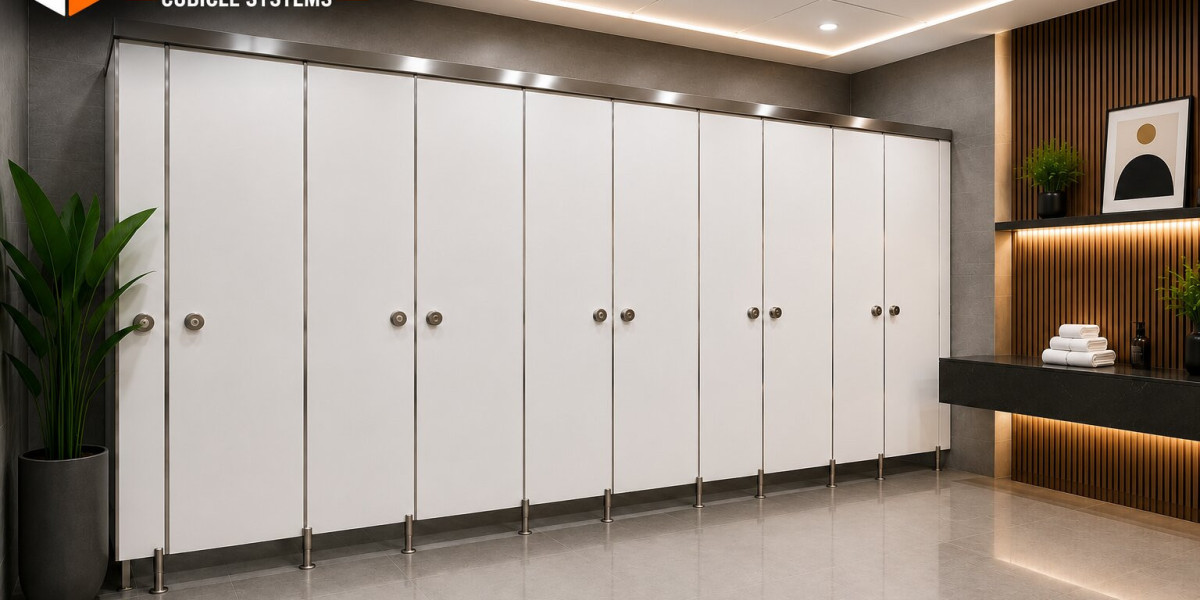

Selecting the appropriate toilet cubicles is critical for ensuring that the commercial washroom is planned effectively and efficiently. Washrooms in offices, schools, hotels, shopping malls, hospitals, restaurants, and other public places are used on a regular basis and even heavily at times. The toilet cubicles should, therefore, offer adequate privacy and be tough, easy to maintain, and appropriate for the space.
The appropriate choice of toilet cubicles will ensure that your washroom looks organized and modern without having to sacrifice functionality. It is critical that you assess your building, its requirements, space available before making any choices.
Consider the Available Washroom Space
The first step is to measure the available area carefully. The number and size of toilet cubicles should allow users to move comfortably without making the washroom feel crowded.
For smaller washrooms, compact layouts and efficient door configurations can help save valuable space. Larger commercial washrooms provide more flexibility and may accommodate additional cubicles, accessible facilities, and separate changing or utility areas.
Proper planning also helps maintain sufficient circulation space between cubicles and other washroom fixtures.
Select a Suitable Cubicle Material
Material plays an important role in the performance and appearance of toilet cubicles. Commercial washrooms require materials that can handle frequent use, regular cleaning, and exposure to moisture.
Common options include compact laminate, HPL-based panels, and other durable partition materials. The right choice depends on factors such as the location, expected traffic, maintenance requirements, and project budget.
For areas with high daily usage, choosing a strong and moisture-resistant material can help improve long-term performance.
Focus on Privacy and User Comfort
Privacy is one of the main purposes of a toilet cubicle. The design should provide adequate separation between users while maintaining comfortable access.
Door height, panel configuration, locking systems, and gaps should be considered carefully during planning. Good-quality hinges, locks, handles, and other hardware also contribute to a better user experience.
For public and commercial facilities, privacy should be treated as a basic requirement rather than simply a design feature.
Choose a Design That Matches the Interior
Toilet cubicles are available in different colours, finishes, and configurations. The selected design should complement the overall appearance of the building.
A simple and professional finish may work well in corporate offices, while hotels, malls, and hospitality spaces may use more decorative colours or textures. Neutral finishes can create a clean appearance, whereas carefully selected colours can add character to the washroom.
The goal should be to balance appearance with practical performance.
Consider Maintenance Requirements
Commercial washrooms need regular cleaning, so the cubicle system should be easy to maintain. Smooth and easy-to-clean surfaces can make daily housekeeping more convenient.
Hardware should also be durable enough to withstand repeated opening and closing. Choosing suitable materials and fittings from the beginning can reduce maintenance issues over time.
Regular inspection of hinges, locks, handles, and panels can further help maintain the condition of the cubicles.
Plan for High Traffic Areas
Not every commercial washroom has the same level of usage. An office washroom may experience moderate traffic, while those in malls, railway stations, schools, restaurants, or other public facilities may be used continuously throughout the day.
High-traffic areas require stronger panels, reliable hardware, and a layout designed for frequent use. Selecting a system according to actual usage conditions can help avoid premature wear and unnecessary repair costs.
Include Accessible Washroom Facilities
Commercial washroom planning should also consider accessibility. Where required, an accessible toilet cubicle should provide sufficient internal space and appropriate access for users with mobility requirements.
The door arrangement, grab rails, turning space, and other necessary features should be planned according to applicable building requirements and project specifications.
Pay Attention to Hardware Quality
Even high-quality panels can perform poorly if the hardware is not suitable. Hinges, locks, handles, brackets, legs, and other fittings have an important role in the overall durability of a cubicle system.
For frequently used washrooms, robust hardware can provide smoother operation and reduce the likelihood of frequent replacements.
Balance Quality and Budget
Budget is naturally an important consideration, but the lowest initial price is not always the most economical choice. A cheaper system may require more frequent repairs or replacement if it is not suitable for the environment.
Instead, compare material quality, hardware, expected lifespan, maintenance needs, installation requirements, and overall performance. This approach can help you select a toilet cubicle solution that provides better value over time.
Why Professional Planning Matters
A properly designed toilet cubicle system should work with the complete washroom layout rather than being treated as an isolated element. Panel dimensions, doors, plumbing fixtures, partitions, ventilation, lighting, and user movement all need to work together.
Professional planning can help identify space limitations and create a practical arrangement before installation begins. It also makes it easier to select suitable materials, colours, hardware, and configurations for the project.
Final Thoughts
The right toilet cubicles can improve privacy, organization, durability, and the overall appearance of a commercial washroom. When selecting a system, consider the available space, material, traffic level, privacy, maintenance, accessibility, hardware quality, and budget.