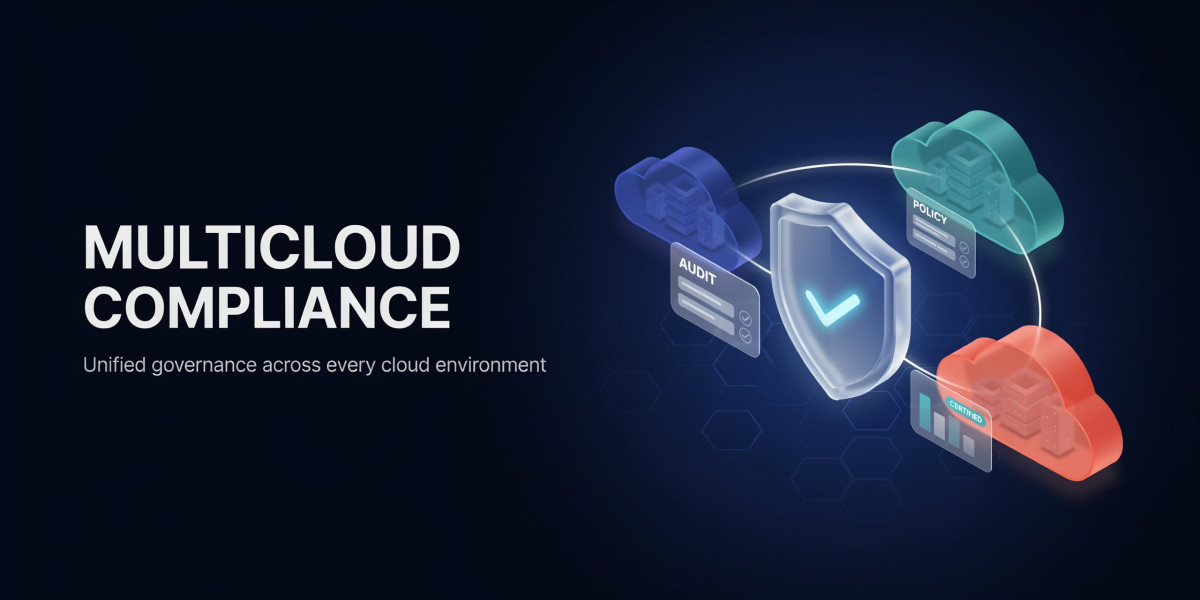

A multi cloud compliance checklist covers ten steps: inventory all cloud assets, identify applicable frameworks, define unified controls, map shared responsibility, enforce identity hygiene, automate evidence collection, monitor for drift continuously, assign control ownership, rehearse audits quarterly, and document everything centrally.
The checklist that saved my sanity
A few years ago, I was brought into a company three weeks before their ISO 27001 surveillance audit. They ran workloads on AWS and Azure. Their compliance "system" was a shared drive full of screenshots and a spreadsheet last updated eight months earlier. We survived, barely, but I promised myself I would never let a team I work with operate like that again.
That experience is why I built the checklist in this post. Multi cloud compliance does not have to be chaotic. It has to be systematic. If you follow these ten steps in order, you will move from hoping you are compliant to knowing you are, with the evidence to prove it.
First, a quick foundation
What is cloud compliance? It is the continuous practice of aligning your cloud environment with the laws, industry standards, frameworks, and internal policies that apply to your business. Compliance in cloud computing never ends, because your environment never stops changing.
Operating across providers adds one critical requirement: consistency. Your controls, policies, and evidence must hold true across AWS, Azure, Google Cloud, or whatever combination you run. Auditors do not grade you per cloud. They grade the whole environment.
The 10-step multi cloud compliance checklist
Step 1: Build a complete asset inventory
Everything starts here. List every account, region, service, database, storage bucket, and workload across every provider. Include shadow IT, forgotten test environments, and that one GCP project a data scientist spun up last year.
You cannot enforce controls on assets you do not know exist. Automated discovery tools beat manual spreadsheets every time, because cloud inventories go stale within days.
Step 2: Identify which frameworks actually apply
Do not boil the ocean. Map your obligations precisely:
• Healthcare data points to HIPAA and HITECH
• Card payments point to PCI DSS
• SaaS customers usually demand SOC 2
• European users bring GDPR
• Enterprise and government buyers often require ISO 27001 or FedRAMP
These cloud security compliance standards overlap heavily. The CSA Cloud Controls Matrix maps common controls across frameworks, so you implement once and satisfy many.
Step 3: Define unified controls in plain language
Write each control once, without cloud-specific jargon. "All customer data is encrypted at rest and in transit." "Production access requires MFA and manager approval." Then, and only then, translate each control into AWS, Azure, and GCP implementations.
This single-control, multi-implementation pattern is the backbone of any cross-cloud program. It is also your best defense against drift between providers.
Step 4: Map the shared responsibility model, per service
Every provider draws the line differently, and it shifts depending on whether you use IaaS, PaaS, or SaaS. AWS documents their model clearly, and so do Microsoft and Google.
Create a simple matrix: for each service you use, what does the provider secure, and what do you secure? This one document answers half the questions auditors ask.
Step 5: Lock down identity across every cloud
Multi cloud security is identity security. Audit every user, role, and service account across all providers. Remove standing admin access. Enforce least privilege. Require MFA everywhere, no exceptions.
Over-privileged identities are among the most common audit findings and the most common breach vectors. Fix this step early, because everything else depends on it.
Step 6: Automate evidence collection
This is where the program stops being painful. Configure tooling that continuously exports control status, configuration state, and access logs into a central store.
When audit season arrives, you should be exporting reports, not taking screenshots. Teams that automate evidence typically cut audit preparation from weeks to days.
Step 7: Monitor for compliance drift continuously
A resource that passed review in January can be non-compliant by March. Deployments change configurations. Permissions expand. Logging gets disabled "temporarily."
Continuous monitoring, with alerts routed to the people who can fix things, is the only reliable defense. Daily automated checks beat quarterly manual reviews by an enormous margin.
Step 8: Assign a named owner to every control
"The security team" is not an owner. A person is. Every control in your program needs one accountable human, per cloud where relevant, with escalation paths when violations appear.
Route findings into Jira, ServiceNow, or whatever your engineers already live in. Compliance tickets that land in unfamiliar tools die quietly.
Step 9: Rehearse the audit every quarter
Run internal audits against your real frameworks four times a year. Test whether your evidence is complete, your controls are effective, and your owners know their responsibilities. Treat these rehearsals like fire drills. Rotate who presents the evidence, and time how long it takes to answer a sample auditor request. If pulling one quarter of access logs takes more than an afternoon, your evidence pipeline needs work before the real audit, not during it.
The goal is to make the real audit boring. When auditors arrive, nothing they ask for should surprise you.
Step 10: Centralize documentation
Policies, control definitions, responsibility matrices, evidence, exception records: one system, one source of truth. Compliance work dies in scattered drives and personal folders.
Document your exceptions too, with reasons and review dates. Auditors respect documented, justified exceptions far more than silent workarounds.
Cloud security examples: what this looks like in practice
Two quick cloud security examples from real engagements:
A fintech I worked with ran PCI DSS workloads on AWS and analytics on GCP. Their checklist-driven approach mapped one encryption control to both clouds, automated evidence from both, and passed their assessment with zero major findings, after failing twice before.
A healthcare SaaS company unified HIPAA controls across Azure and AWS, assigned owners per control, and cut their audit prep from six weeks to four days. Same team. Same frameworks. Different system.
Key Takeaways
• This discipline is a system, not a scramble. Ten disciplined steps beat heroic effort every time.
One honest note on tooling. No platform makes you compliant by itself. Tools centralize visibility, automate evidence, and alert you to drift, but they cannot write your policies, assign your owners, or justify your exceptions. I have seen teams buy excellent platforms and still fail audits because the process behind the tool was missing. Buy tooling to accelerate a program, not to replace one.
• Inventory and framework scoping come first. Everything else builds on them.
• Define controls once in plain language, then implement per cloud. This prevents drift.
• Automated evidence and continuous monitoring convert audits from emergencies into reviews.
• Named human owners, not teams, close the gap between finding a violation and fixing it.
Frequently Asked Questions
What should a multi cloud compliance checklist include?
It should cover asset inventory, framework identification, unified control definitions, shared responsibility mapping, identity hygiene, automated evidence, drift monitoring, control ownership, quarterly audit rehearsals, and centralized documentation.
How long does it take to become multi cloud compliant?
For a focused framework like SOC 2, expect three to nine months depending on your starting posture. Continuous monitoring and automated evidence dramatically shorten every subsequent audit cycle.
Which cloud security compliance standards should we start with?
Start with what your customers and regulators demand. For most SaaS businesses that is SOC 2. Healthcare adds HIPAA, payments add PCI DSS, and global enterprises typically layer ISO 27001 on top.
Can one tool handle compliance across AWS, Azure, and GCP?
A single platform can centralize visibility, monitoring, and evidence, but tools alone do not create compliance. You still need defined controls, clear ownership, and documented processes behind the tooling.
What is the most commonly skipped checklist step?
Mapping the shared responsibility model per service. Teams assume the provider covers more than it does, and auditors find the gaps.
How do we keep multi cloud compliance from becoming a yearly panic?
Make it continuous: daily automated checks, quarterly internal audits, and evidence that collects itself. When compliance is a habit, audits become routine.
Your next step
Print this checklist. Score yourself honestly on each of the ten steps. Wherever you score weakest, that is where your next audit finding is hiding.
If you want a professional second opinion, tkxel's team runs multi cloud security and compliance assessments across AWS, Azure, and GCP and delivers a prioritized risk map, usually within one to two weeks. Their free multi cloud security consultation is the fastest way to find out which checklist items are quietly failing in your environment, before an auditor grades them for you.