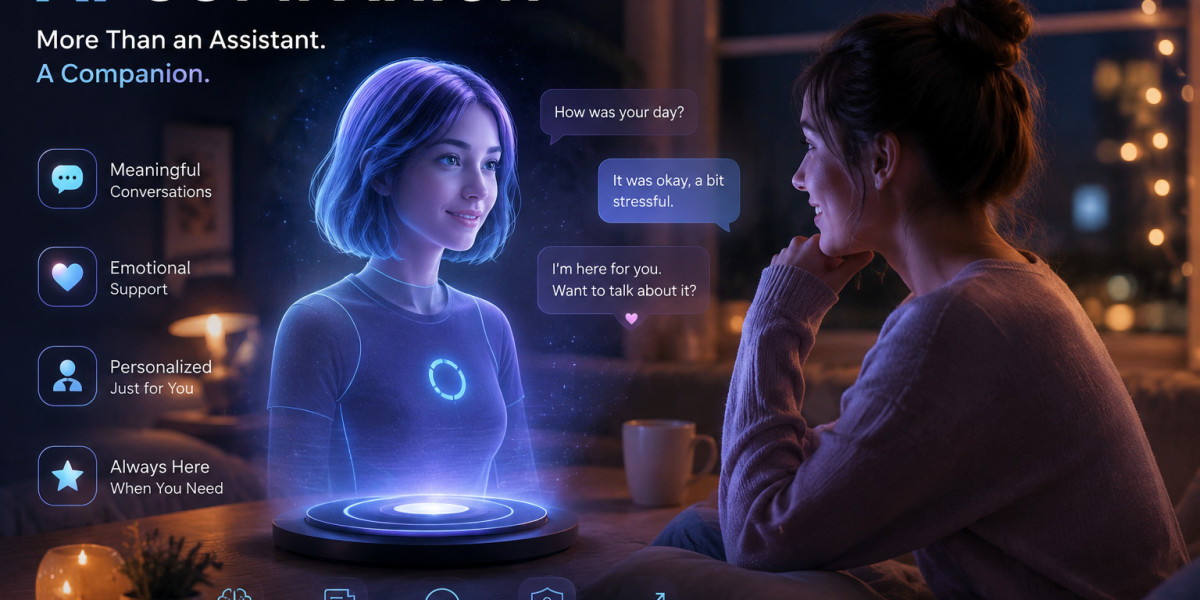

Digital interaction has changed considerably over the last few years. Social media once focused mainly on sharing updates, messaging apps made instant communication normal, and online communities gave people new ways to connect around common interests. Now, AI companions are adding another layer to digital communication.
Unlike a standard chatbot built only to answer questions, an AI companion can maintain conversations, respond to personal context, adapt its tone, and create a more continuous experience over time. This has changed what people expect from digital spaces. A user is no longer interacting only with a search box, feed, or software interface. In many cases, the interaction feels more conversational and personal.
Digital Conversations Are Becoming More Personal
Traditional digital tools were generally built around commands. A person searched for something, clicked a button, sent a message, or received a result. AI companions have made this process more conversational.
Instead of entering a short request and leaving, users can continue a discussion. They can ask follow-up questions, change the subject, return later, and expect some degree of continuity. Consequently, the experience can feel less like operating software and more like participating in an ongoing conversation.
This shift is especially relevant for people who spend significant time in digital spaces. Online interaction has often been fragmented between social networks, messaging platforms, games, forums, and productivity tools. An AI companion can bring a conversational layer into many of these experiences.
For example, a user may discuss a difficult day, ask for help organizing tasks, talk about a hobby, and then return to a previous topic. The value comes partly from the continuity of the interaction. In comparison to a one-time search query, an ongoing conversation gives users room to express themselves in more detail.
Why Personalized AI Characters Are Attracting Attention
Personalization is one of the main reasons AI companions are changing digital interaction. People have always preferred online experiences that feel relevant to their interests. Recommendation systems personalize videos, music, shopping suggestions, and social feeds. AI companions take personalization further because the interaction itself becomes the product.
A user can select a personality, communication style, interests, or conversational approach. This makes digital interaction feel more adaptable to individual preferences. For some users, the appeal may be entertainment. For others, it may be the ability to have a conversation without feeling judged or rushed.
The popularity of searches and products connected to an AI girlfriend also reflects a broader shift toward personalized digital relationships. The attraction is not limited to romance. It points to demand for AI characters that can respond consistently, maintain a recognizable personality, and create a sense of continuity during repeated interactions.
Xchar AI is part of this broader movement toward more personalized AI conversations, where users increasingly expect digital experiences to respond in ways that feel less generic and more relevant to their preferences.
However, personalization can also create stronger expectations. Once users become accustomed to a companion remembering preferences or responding in a familiar tone, a generic chatbot may feel less engaging. As a result, companies developing conversational AI are paying greater attention to memory, personality consistency, contextual responses, and long-term interaction design.
Always-Available Communication Creates New Habits
Human communication depends on timing. Friends may be busy, family members may not be available, and online communities may not provide an immediate response. AI companions operate differently because they are available whenever the user opens the platform.
That availability can be especially appealing during moments when someone wants to talk through an idea, reflect on a situation, or simply have a conversation without waiting for another person to respond.
Similarly, people may use digital companions in ways that overlap with several existing online activities. A single conversation can move between entertainment, planning, personal reflection, storytelling, and casual chat.
A 2026 study involving 233 young adults in India found that 39.7% of participants reported using conversational AI daily, while another 38.9% used it weekly. The research also noted a complex relationship between AI usage and loneliness, with the authors cautioning that their cross-sectional findings could not establish causation.
The findings are useful because they show how regularly conversational AI is becoming part of digital routines. Still, frequency alone does not explain whether the experience is beneficial or harmful. A person may have a brief conversation once a day, while another may spend several hours relying heavily on an AI system for emotional interaction.
That is why the quality and purpose of interaction deserve as much attention as usage numbers.
Digital Spaces Are Expanding Beyond Standard Chat
AI companions are also influencing what users expect from chat-based platforms. Text conversations are no longer the only format. Voice interaction, avatars, generated characters, images, and interactive storytelling can all become part of the same experience.
This creates opportunities for more immersive digital environments. A companion may communicate through text during one session and voice during another. Likewise, visual elements can help create a more recognizable identity for an AI character.
Interest in tools connected with an AI unfiltered generator points to another side of this change: users increasingly want greater control over the type of digital experiences and creative interactions available to them. This demand also makes responsible platform design more important, particularly where content boundaries, age controls, consent, and moderation are concerned.
Not every user wants the same level of realism or freedom. Some prefer practical conversations, while others want fictional characters, creative roleplay, or highly customized experiences. Consequently, digital platforms may increasingly offer different interaction settings rather than treating every user in the same way.
Research Shows Both Potential and Important Differences Between Users
The discussion around AI companions often becomes too simple. Some conversations present them as a solution to loneliness, while others present them only as a threat to human relationships. Current research suggests the reality is more complex.
A large study of 404 regular companion chatbot users from MIT researchers found that chatbot usage itself did not directly predict loneliness. Instead, factors such as social network size, personality characteristics, and problematic usage patterns were important. The researchers identified seven different user profiles, showing that the same technology can produce very different experiences for different people.
Likewise, research published in 2026 using data from 14,721 Japanese adults found that AI companion use was associated with higher scores across several well-being measures. The associations varied depending on loneliness and social connections, and the researchers also called for future work to examine causation more closely.
At the same time, a 2025 study of Danish high-school students found that students using chatbots for social support reported greater loneliness and less perceived social support than some other groups. The research did not establish that chatbots caused loneliness; rather, it highlighted that people who already feel socially disconnected may turn to chatbots for support.
Research Snapshot: AI Companionship Is Not One-Size-Fits-All
Research finding | What it suggests |
27% of internet-using US adults reported social interactions with AI | Social uses of AI have moved beyond a small specialist audience |
51% of surveyed AI companion users said AI helps when stressed or upset | Emotional support is a meaningful use case for many users |
50% said they talk to AI about personal problems or feelings | AI is becoming a private conversational space for some people |
39.7% of one Indian young-adult sample used conversational AI daily | Regular conversational AI use can become part of everyday routines |
14.6% of surveyed Danish high-school students reported friend-like chatbot conversations | Social chatbot use exists, but behavior differs considerably across populations |
Sources for these figures come from recent surveys and academic studies, and the results should be interpreted according to each study's population and methodology.
The main point is clear: outcomes depend on who is using the technology, why they are using it, and how it fits into their existing social life.
The Boundary Between Tool and Companion Is Becoming Less Clear
For many years, software was judged mainly by efficiency. Did it save time? Did it solve a problem? Did it complete a task correctly?
AI companions add another question: How does the interaction feel to the user?
This changes product design. Developers now need to consider tone, consistency, memory boundaries, emotional responses, and the possibility that users may form expectations similar to those found in social interaction.
Admittedly, an AI system does not experience emotions in the same way a human does. However, users can still experience the conversation as meaningful. That difference between what the system is and how the interaction is perceived creates important design questions.
For example, should an AI clearly communicate its limitations? Obviously, yes. Should platforms avoid creating misleading impressions about consciousness or genuine human feelings? Clear communication is important here as well.
Xchar AI and other products operating in this category face a design challenge that goes beyond making conversations more realistic. The experience also needs boundaries that help users recognize what AI can and cannot provide.
Trust, Privacy, and Emotional Safety Will Shape Long-Term Growth
As conversations become more personal, privacy becomes more important.
Users may share personal stories, concerns, preferences, and emotional thoughts with an AI companion. Therefore, companies need clear policies about data collection, retention, deletion, and user control.
Trust is not built only through privacy policies hidden at the bottom of a website. It also depends on how clearly a platform explains what information is stored and how users can manage their data.
Emotional safety matters too. An AI companion designed to encourage endless dependence may create very different outcomes from one designed to support healthy and balanced use.
Research published in Nature Human Behaviour in August 2026 found that companionship use was associated with lower well-being in some contexts, particularly among users with smaller social networks and more intensive or highly disclosive interactions. The study reinforces the point that usage patterns and offline circumstances matter.
Consequently, responsible development may involve tools that encourage transparency, allow users to control memory, set clear boundaries, and avoid deliberately manipulating emotional dependence.
What the Future of Digital Interaction May Look Like
The next stage of digital interaction may not involve people abandoning social media or human communication. Instead, AI companions may become another layer within the digital experiences people already use.
A person could interact with AI while learning, gaming, creating content, managing work, practicing a language, or talking through ideas. The same system may shift between practical assistance and conversational interaction depending on the user's needs.
Voice may also become more important. As natural speech technology improves, typing may no longer be the primary way users communicate with AI companions. Meanwhile, visual avatars and more advanced personalization could make each interaction feel increasingly distinct.
Xchar AI fits into this changing direction, where the focus is moving beyond basic question-and-answer tools toward more continuous and personalized forms of digital communication.
Conclusion
AI companions are changing digital interaction because they make communication with technology more continuous, personal, and conversational. Instead of only searching, clicking, and receiving results, users can now participate in ongoing exchanges that adapt to context, preferences, and communication styles.
Recent research shows growing social and emotional use of AI, but it also shows that there is no single outcome for every user. Some people may find companionship, reflection, or practical support helpful. Others may face concerns related to overuse, emotional dependence, or reduced engagement with human social networks.