
INTRODUCTION
The demand for controlled environments is increasing across hospitals, pharmaceutical facilities, biotechnology laboratories, electronics manufacturing, and other industries where air quality and contamination control are essential. New technologies are transforming how these environments are planned, installed, monitored, and maintained. A modern Laminar Airflow System Turnkey Project Company must consider innovations such as intelligent airflow controls, advanced HEPA filtration, real-time environmental monitoring, energy-efficient HVAC systems, and automated building management. These developments help facilities achieve more consistent environmental performance, improve operational visibility, and manage maintenance requirements. As cleanroom expectations evolve, integrating suitable technologies from the design stage is becoming increasingly important for long-term reliability and efficiency.
1. Smart Airflow Control Systems
One of the most significant developments in laminar airflow technology is the use of intelligent control systems. Traditional airflow arrangements often rely on fixed operating settings. Smart systems can use sensors and automated controls to adjust selected parameters according to actual operating conditions.
These systems may monitor:
- Air velocity and airflow distribution.
- Room temperature and relative humidity.
- Differential pressure between controlled areas.
- Fan and motor operating conditions.
- Filter pressure differential.
- Equipment operating status.
Based on predefined control logic, variable-speed drives can adjust fan operation when suitable. This can help maintain the required airflow while avoiding unnecessary energy consumption during periods of reduced demand.
However, airflow adjustments must remain within validated operating limits. Automated controls should never compromise the airflow pattern or environmental conditions required for a particular process.
2. Advanced HEPA and ULPA Filtration Technologies
Filtration remains a central element of controlled-environment engineering. High-Efficiency Particulate Air (HEPA) filters are widely used to remove airborne particles, while Ultra-Low Penetration Air (ULPA) filters may be selected for applications with more demanding particle-control requirements.
Modern filtration developments focus on improving filter efficiency, reducing pressure drop, strengthening construction, and supporting reliable installation.
Important Filtration Developments
- Improved filter media and pleat configurations.
- Low-resistance filter designs.
- Better frame and gasket arrangements.
- Enhanced sealing systems.
- Compact filter modules for specialized applications.
- Improved filter integrity testing methods.
Selecting a filter requires more than choosing an efficiency rating. Engineers must consider airflow volume, face velocity, pressure drop, filter dimensions, operating conditions, and the required cleanroom classification.
A filter's pressure differential indicates resistance to airflow and may help identify loading. It does not establish filter integrity. Appropriate integrity testing is needed to verify installation and identify leaks.
A reliable turnkey project should include filter selection, installation controls, testing, documentation, and a planned replacement strategy.
3. Real-Time Environmental Monitoring
Environmental monitoring is becoming increasingly sophisticated. Modern sensors and connected monitoring platforms can provide continuous information about conditions inside controlled spaces.
Instead of depending entirely on periodic manual readings, facilities can monitor important parameters and receive alerts when readings move outside predefined limits.
Parameters That Can Be Monitored
- Airborne particle concentration.
- Temperature and humidity.
- Room-to-room differential pressure.
- Air velocity at selected locations.
- Filter pressure differential.
- Equipment operating status.
- Selected gas or chemical parameters where relevant.
Monitoring platforms can store readings, generate reports, and help maintenance teams identify recurring deviations. They can also support investigations by providing time-stamped records of environmental events.
Nevertheless, monitoring alone does not establish regulatory compliance. Sensor calibration, measurement location, acceptance criteria, validation, and documented corrective actions remain essential.
4. Artificial Intelligence and Predictive Maintenance
Artificial intelligence and data analytics are creating new opportunities for maintenance planning. Connected equipment can generate information about fan performance, motor vibration, power consumption, filter loading, and operating hours.
Analytical software can examine these trends and identify patterns that may indicate developing equipment problems.
For example, a gradual increase in filter pressure differential may suggest loading. Changes in motor vibration or electrical consumption may indicate that a fan or motor requires inspection.
Benefits of Predictive Maintenance
- Earlier identification of abnormal equipment behaviour.
- Better planning of filter replacement.
- Reduced unexpected equipment downtime.
- More informed maintenance scheduling.
- Improved spare-parts planning.
- Better visibility into lifecycle costs.
Predictive maintenance should complement, not replace, scheduled inspections and manufacturer-recommended servicing. Automated predictions also require reliable data and verification by qualified technical personnel.
5. Energy-Efficient HVAC and Variable-Speed Technology
HVAC systems can represent a significant portion of the energy consumption of cleanroom facilities. New control technologies are helping engineers manage airflow and thermal loads more efficiently.
Variable-frequency drives allow fan speeds to be adjusted according to defined operating requirements. High-efficiency motors, optimized ductwork, appropriate insulation, and carefully selected air handling units can also improve energy performance.
Emerging Energy-Saving Approaches
- Variable-speed fan operation.
- High-efficiency motors.
- Demand-based control where process requirements permit.
- Optimized air distribution.
- Reduced duct leakage.
- Efficient prefiltration arrangements.
- Heat recovery where technically and hygienically suitable.
- Energy monitoring through building management systems.
Energy-saving strategies must be evaluated against cleanliness, airflow uniformity, pressure relationships, temperature, and humidity requirements. Reducing fan speed without proper engineering assessment can affect the performance of a controlled environment.
6. Building Management System Integration
Building Management Systems (BMS) are increasingly used to coordinate HVAC equipment, electrical systems, environmental sensors, and facility alarms.
When a laminar airflow installation is integrated with a suitable BMS, authorized facility personnel can access important operational information through a centralized interface.
A BMS may provide:
- Air handling unit status.
- Fan speed and operating schedules.
- Temperature and humidity trends.
- Differential pressure alarms.
- Filter pressure differential.
- Equipment fault notifications.
- Energy consumption records.
Integration can improve communication between facility teams and maintenance personnel. It can also support more systematic investigation of operational problems.
For critical facilities, BMS integration should include appropriate cybersecurity, access permissions, backup arrangements, and reliable alarm escalation procedures.
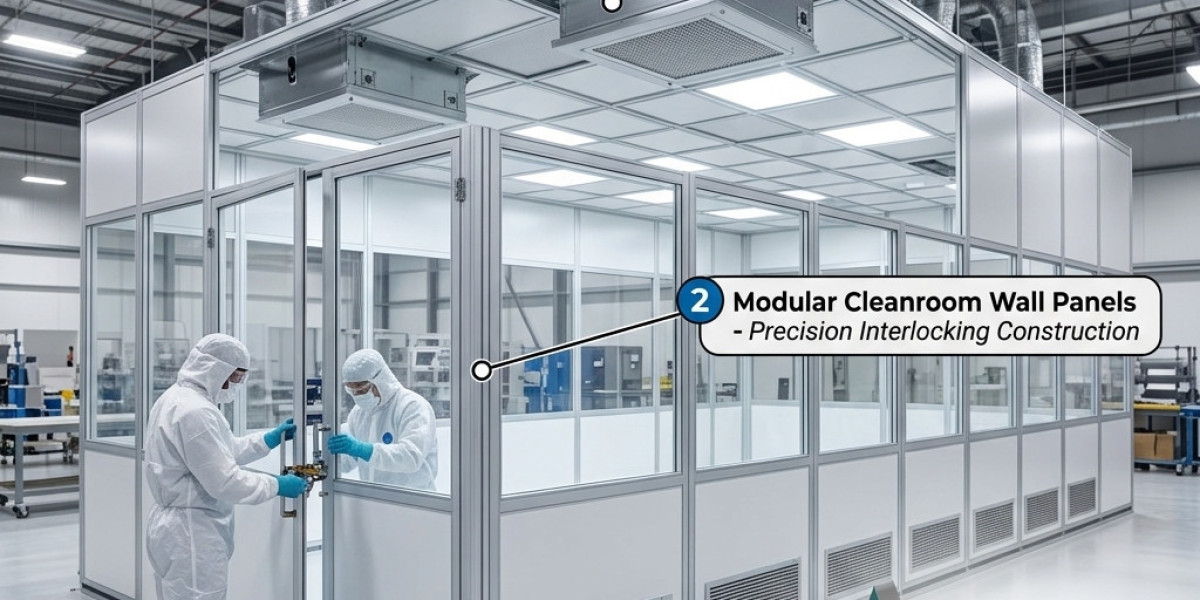
7. Modular and Prefabricated Cleanroom Construction
Modular construction is changing the way controlled environments are delivered. Instead of completing every building element through conventional site-based construction, selected cleanroom components can be manufactured or assembled in controlled production environments.
These components may include:
- Modular wall and ceiling panels.
- Prefabricated service sections.
- Integrated filter and lighting modules.
- Pre-engineered air handling connections.
- Standardized electrical and control assemblies.
Modular construction can improve installation coordination and reduce certain site activities. It may also make future expansion or modification easier when the original design anticipates these requirements.
However, modular construction does not automatically guarantee cleanroom performance. Joint sealing, surface compatibility, service penetrations, airflow distribution, and commissioning must all be properly verified.
8. Digital Twins and Advanced Design Simulation
Digital twin technology is an emerging approach that creates a digital representation of a physical facility or system. When connected to reliable operational data, the model can help engineers understand how the installed system performs over time.
Computational Fluid Dynamics (CFD) is another valuable technology used during the design process. It can simulate airflow patterns, identify potential stagnant zones, and help assess the effects of equipment placement and room geometry.
How These Technologies Support Design
- Evaluate airflow distribution before installation.
- Identify possible dead zones and turbulence.
- Compare alternative diffuser arrangements.
- Assess the impact of equipment positioning.
- Support investigation of airflow deviations.
- Improve coordination between HVAC and architectural teams.
CFD results depend on assumptions, boundary conditions, and model quality. Simulation should support engineering decisions, not replace physical testing and commissioning after installation.
Digital models can also become useful operational references when updated with accurate as-built information and maintenance records.
9. IoT-Enabled Sensors and Remote Monitoring
The Internet of Things (IoT) allows sensors and equipment to exchange information through connected networks. In cleanroom environments, this technology can help maintenance teams monitor system conditions without needing to be physically present at every location.
IoT-enabled monitoring may provide notifications about:
- Abnormal temperature readings.
- Changes in room pressure.
- Fan failure or abnormal operation.
- Filter loading.
- Sensor faults.
- Unexpected equipment shutdowns.
Remote access can support faster response, especially in facilities operating across multiple locations. However, connected systems should use secure networks, controlled user access, appropriate data retention, and tested communication arrangements.
Remote monitoring should not be treated as a substitute for on-site inspection, calibration, or qualified technical intervention.
10. Advanced Materials and Hygienic Surface Technologies
Materials used in controlled environments are also evolving. Modern cleanroom panels, protective coatings, sealants, and flooring systems are designed to support cleanability and reduce particle accumulation.
Depending on the application, suitable materials may include coated metal panels, specialized cleanroom wall systems, seamless flooring, and compatible joint-sealing products.
Important Material Considerations
- Smooth and cleanable surfaces.
- Low particle shedding.
- Chemical compatibility with cleaning agents.
- Resistance to expected moisture exposure.
- Durable joints and sealed penetrations.
- Fire and structural performance.
- Maintenance and repair requirements.
The entire installed assembly must be assessed rather than selecting materials based only on product descriptions. Coatings, sealants, joints, fasteners, and service openings can all influence long-term performance.
11. Automated Alarms and Intelligent Safety Systems
Automated alarms are becoming more integrated with airflow control and environmental monitoring systems. They can notify authorized staff when critical operating parameters exceed configured limits.
For example, an alarm may activate when differential pressure falls below an established threshold, a fan stops operating, or temperature moves outside the approved range.
A well-designed alarm system should include:
- Clear alarm priorities.
- Visual and audible notifications where appropriate.
- Defined escalation procedures.
- Time-stamped event records.
- Alarm acknowledgement and reset controls.
- Backup power for essential monitoring.
- Periodic functional testing.
Alarm limits should be based on the facility's operating requirements and validated design. Excessive or poorly configured alarms can create alarm fatigue, so thresholds and escalation rules should be carefully managed.
12. Integration of Sustainability and Lifecycle Management
The future of laminar airflow technology is not limited to improving filtration or automation. Facility owners are increasingly considering energy use, maintenance costs, equipment lifespan, and environmental impact throughout the project lifecycle.
A sustainable design may incorporate efficient motors, durable materials, optimized airflow paths, suitable filter arrangements, and accessible maintenance provisions.
Lifecycle planning should also account for:
- Availability of replacement filters.
- Access to serviceable components.
- Energy consumption during normal operation.
- Spare-parts availability.
- Equipment upgrade requirements.
- Safe disposal of used filters and other maintenance waste.
The best solution is not necessarily the one with the lowest initial installation cost. A system that is easier to maintain, operates reliably, and meets the required environmental conditions may provide better long-term value.
13. The Importance of Turnkey Project Integration
Innovative technologies deliver their greatest value when they are coordinated as part of a complete engineering solution. A turnkey project approach brings design, equipment selection, installation, testing, and commissioning together under a defined project plan.
A professional project process should include:
- Understanding the facility's application and cleanliness requirements.
- Assessing site conditions and available utilities.
- Preparing airflow and HVAC design calculations.
- Selecting filters, fans, controls, and monitoring equipment.
- Coordinating electrical, mechanical, and architectural systems.
- Installing and sealing the complete assembly.
- Performing airflow and filter integrity tests.
- Verifying environmental parameters and control functions.
- Providing documentation and staff guidance.
- Establishing preventive maintenance requirements.
Applicable standards and guidelines, including ISO 14644 where relevant, should be considered according to the facility's intended classification and use. The required testing and acceptance criteria should be established before installation begins.
Conclusion
The future of controlled-environment engineering will be shaped by intelligent automation, advanced filtration, real-time monitoring, predictive maintenance, energy-efficient HVAC, modular construction, and digital design technologies. These innovations can improve operational visibility, support consistent airflow performance, and simplify long-term facility management when they are selected and validated correctly. Successful implementation requires more than installing advanced equipment; it requires coordinated engineering, quality installation, commissioning, and ongoing maintenance. By combining modern technology with application-specific planning, Altus Airflow can help facilities develop reliable laminar airflow solutions that meet present requirements while remaining adaptable to future needs.
Frequently Asked Questions (FAQs)
1. What is the most important technology shaping modern laminar airflow systems?
Smart airflow controls, advanced filtration, and real-time environmental monitoring are among the most important developments. A Laminar Airflow System Turnkey Project Company can integrate these technologies to support controlled and measurable system performance.
2. How does AI improve laminar airflow system maintenance?
AI-based analytics can identify unusual equipment trends, such as increasing filter resistance or changes in motor performance. A Laminar Airflow System Turnkey Project Company can use these insights to support predictive maintenance planning.
3. What role do HEPA filters play in advanced laminar airflow systems?
HEPA filters remove airborne particles and help maintain required cleanliness levels when correctly selected, installed, and tested. A Laminar Airflow System Turnkey Project Company should consider filter efficiency, pressure drop, sealing, and integrity testing.
4. Can IoT technology improve cleanroom monitoring?
Yes. IoT-enabled sensors can transmit environmental and equipment data to centralized platforms and provide alerts when configured limits are exceeded. A Laminar Airflow System Turnkey Project Company can integrate secure remote monitoring into suitable projects.
5. How does a BMS support laminar airflow operations?
A Building Management System can coordinate HVAC controls, equipment status, alarms, and environmental data. A Laminar Airflow System Turnkey Project Company can connect compatible systems to improve facility monitoring and operational management.
Read Our Previous Blog------>How can IVF Lab Design In India support uninterrupted laboratory operations during power failures?