
A project can lose months when accessibility is raised only at the approval stage. Working with an accessibility consultant UAE developers and designers trust means the input arrives while layouts can still change. This article follows a project from concept to operation and shows what support fits each stage.
Concept and Masterplan: Where Early Input Pays Most
The best moment to involve consultants is the concept or masterplan stage, before layouts are fixed. Dubai’s Wosool seal and Abu Dhabi’s Sahel rating both check accessibility from the design stage, so early advice shapes the first layouts and not only the final drawings.
Legal duties point the same way. Federal Law No. 29 of 2006 and emirate-level codes place clear obligations on owners and designers. In Dubai, the Dubai Universal Design Code has applied since 2017 to all newly authorised public and private projects, enforced by Dubai Municipality and the RTA.
Cost makes the case too. Adding a ramp, lift or accessible washroom after handover costs far more than drawing it in at concept stage, so early review protects both budget and programme. A practical first step is to put accessibility on the agenda of your first design meeting and ask which codes apply in your emirate.
Design Stage: Reviews Against the Right Codes
At design stage, a design review checks drawings for barrier-free design against the Dubai Universal Design Code, Abu Dhabi requirements and international standards. The aim is to catch issues while they are still cheap to fix.
Local codes govern approval, but ISO 21542:2021, BS 8300 and the US ADA Standards often fill the gaps, especially for global hotel and retail brands. A universal design consultancy maps them against the local code and applies the stricter rule.
There is a practical payoff in approvals as well. Code-referenced drawings and clear reports mean fewer comments from Dubai Municipality or the Department of Municipalities and Transport, and fewer resubmissions. Choosing an UAE accessibility consultant teams can work with early makes that process smoother.
Existing Buildings: Audits That Follow the Visitor
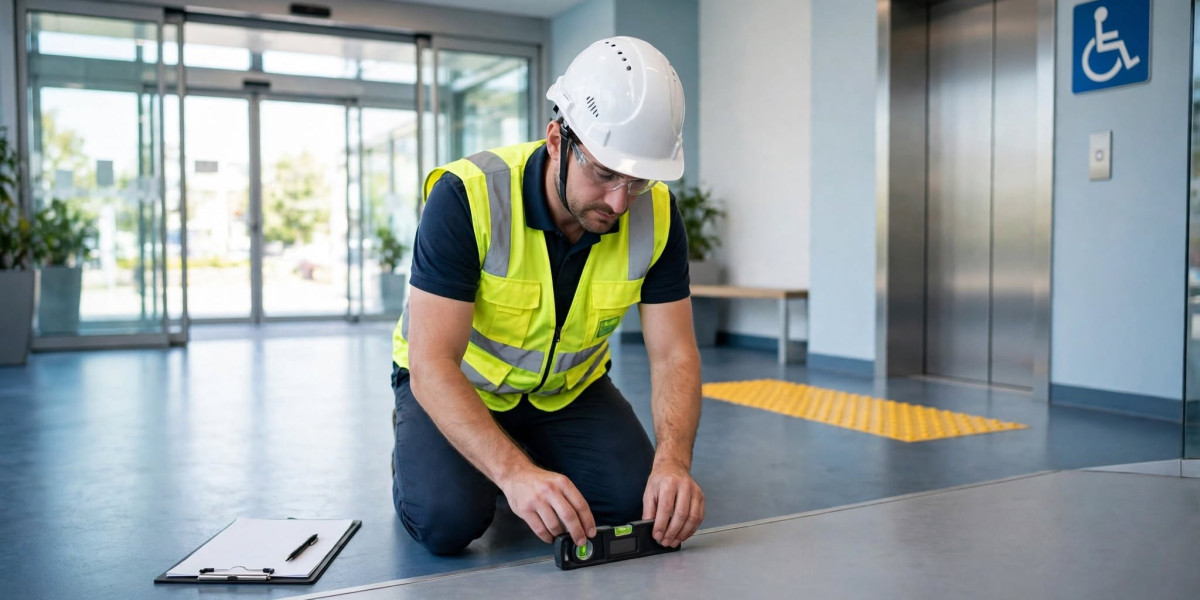
For buildings already built, an audit takes over from the design review. In the UAE it follows a visitor’s full route, from drop-off to washroom, and ends in a ranked action plan your team can budget for. A typical audit covers:
Parking and drop-off
Entrances
Ramps and lifts
Washrooms
Wayfinding
Emergency exits
Each finding should cite the clause it fails and be ranked by risk and cost, so urgent fixes come first. The same approach helps existing buildings prepare for Dubai Municipality’s Wosool accessibility assessment.
Share the ranked list with budget holders early. A plan with costs attached helps finance teams approve works in phases instead of all at once.
The route-based method mirrors an accessibility user journey assessment, which asks whether the experience is continuous from arrival to exit. Vortex Access applied that thinking on Dubai Metro, with accessibility and universal design input across the passenger journey from station entry to emergency egress.
An accessibility user journey assessment matters because a compliant element can still fail when the journey around it is fragmented. An accessible toilet, for example, is of little use without an accessible route to it.
Local Teams and Ongoing Training
Local presence helps with approvals. Vortex Access has offices in Dubai (Al Barsha) and Abu Dhabi (Yas Island). The Dubai team supports Universal Design Code compliance on new projects, while the Abu Dhabi team guides master plans, public spaces and buildings through the Sahel rating system, from design submission to construction audit.
Sector rules can add detail. A Dubai Health Authority checklist from June 2025 covers new and relocated hospitals, day surgery centres and outpatient clinics. It adds items such as tactile paving, accessible examination rooms and wheelchair space in waiting areas.
Training closes the loop. Workshops for designers, facility managers and frontline staff make serving People of Determination part of everyday practice, not a one-off checklist. When you compare any accessibility consultant UAE clients recommend, ask whether training is part of the offer.
Conclusion
Match the support to the stage: early advice at concept, code-referenced reviews at design and route-based audits for finished buildings. Agree which codes apply, rank findings by risk and cost, and train the people who run the building. For a clear view of how your building works from arrival to exit, an accessibility user journey assessment is a sensible next step, and the Vortex Access team is happy to talk it through.
FAQs
1. When should a UAE project involve consultants?
At the concept or masterplan stage, before layouts are fixed.
2. Is the Dubai Universal Design Code mandatory?
Yes. Since 2017 it has applied to all newly authorised public and private projects in Dubai.
3. Do I need a design review or an audit?
A design review checks drawings, so it suits new builds and refurbishments. An audit inspects a finished building. Many projects need both.
4. Where are the UAE offices?
Dubai (Al Barsha) and Abu Dhabi (Yas Island).