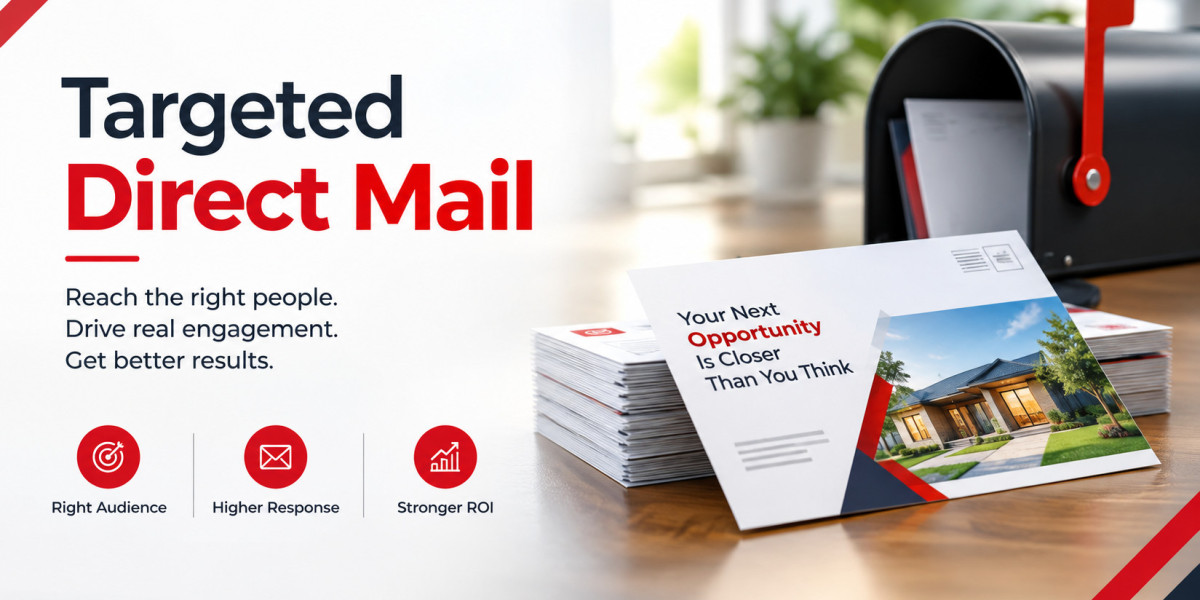

A business can spend heavily on design, printing, and postage and still struggle if the mail reaches people who have little reason to respond. We see this problem when teams focus first on how many pieces they can send instead of asking which households or businesses actually fit the offer.
A well-planned Targeted Direct Mail campaign starts with audience quality. Rather than treating every address in a market as equally valuable, we can narrow the mailing around geography, customer characteristics, property data, business type, purchase behavior, or other factors that connect directly to the campaign goal.
The objective does not involve finding the smallest possible audience. It involves finding a useful audience large enough to support the campaign while removing obvious mismatches. That balance helps businesses spend more of the mailing budget on people who can realistically become customers.
Targeted Direct Mail Improves Audience Relevance
Traditional broad-reach advertising can create awareness, but local businesses often need something more specific. A roofing contractor does not need to reach renters. A commercial cleaning company may care more about office managers than residential households. A dental practice may need families within a realistic driving radius rather than every address across a large county.
Targeted mailing gives businesses more control over those decisions. We can shape the list around the type of customer the offer actually serves instead of relying only on total address count.
Better Reach Starts With Better Fit
A mailing list should answer a simple question: why does this recipient belong in the campaign?
That reason might involve location, homeownership, property type, company size, purchase history, age of a home, recent move, or another factor that affects the likelihood of needing the service.
When teams cannot explain why a segment belongs on the list, we usually question whether that segment deserves budget.
Targeting Helps Reduce Obvious Waste
No marketing channel eliminates waste completely. People move, needs change, timing varies, and not every qualified prospect wants to buy today.
Still, businesses can remove obvious mismatches before printing. A company that only serves homeowners can exclude many unsuitable addresses. A B2B provider can narrow its audience to industries and company sizes that match its services.
That discipline makes the campaign easier to evaluate because the business knows the audience met basic qualification standards before the mail arrived.
A Defined Audience Creates A Better Performance Benchmark
Broad campaigns sometimes make weak results difficult to diagnose. The business cannot tell whether the problem came from the audience, offer, design, timing, or service itself.
A clearly defined audience gives the team a stronger starting point. If the list makes sense, the business can test other variables with greater confidence.
That does not guarantee success, but it makes campaign learning more useful.
Start With The Customer Before Building The Mailing List
We recommend defining the customer before reviewing available list filters. Data vendors often offer dozens of criteria, and that variety can tempt businesses to build complicated audiences without a clear reason.
The strongest targeting plans usually start with real customer behavior rather than a long list of demographic options.
Identify The Problem The Customer Needs Solved
Start with the service or product the campaign promotes.
Who normally needs it? What event creates the need? How far will people travel? Does the buyer need to own property? Does the business serve consumers, companies, or both?
These questions create a practical profile that the mailing data can support.
Look At Existing Customer Patterns
Current customers often provide better clues than assumptions.
Businesses can review ZIP Codes, neighborhoods, order values, service categories, repeat frequency, property types, company sizes, or other information they already collect. Patterns often appear quickly.
If most profitable customers share certain characteristics, those characteristics may help shape prospect targeting.
Avoid Building An Imaginary Perfect Customer
Audience profiles can become too narrow when businesses try to define every detail.
A company may decide that its ideal customer has a specific age, income, family size, property value, and lifestyle profile even though only two of those factors actually affect demand.
We prefer using the few criteria that have a clear business connection. Excessive filtering can remove good prospects without adding meaningful precision.
Geographic Targeting Keeps Campaigns Inside A Realistic Market
Location remains one of the strongest targeting factors for local businesses.
Even an excellent prospect loses value when the business cannot serve the location conveniently or profitably. We therefore treat geography as an operational decision, not just a marketing filter.
Define The Real Service Area
Businesses often choose a radius because it looks convenient on a map. Customer behavior may tell a different story.
A five-mile radius around a restaurant may include neighborhoods separated by highways, rivers, or travel patterns that reduce actual visits. A contractor may serve a larger area but earn less on jobs that require long travel.
We recommend defining geography through real serviceability and customer behavior.
Compare Core Areas With Expansion Areas
Core markets often contain a high concentration of current customers or stronger brand recognition.
Expansion areas may share similar household or business characteristics but produce fewer current customers. These areas can make good test segments when the business wants controlled growth.
Separating the two lets teams compare performance instead of blending every local area into one result.
ZIP Codes Alone May Hide Important Differences
A single ZIP Code can contain several very different neighborhoods.
Homeownership, income ranges, housing types, property ages, business density, and customer behavior can vary considerably inside one postal area.
When those differences matter to the offer, businesses should combine geography with another useful targeting criterion.
Mailing List Quality Matters As Much As Audience Strategy
A strong targeting concept cannot compensate for poor data.
Duplicate records, outdated addresses, incorrect names, missing fields, and old business contacts increase waste and complicate reporting. List preparation deserves attention before creative production begins.
Work With Current Address Data
People and businesses move.
The longer a list sits unused, the more uncertainty it creates. Businesses should review data freshness, address standardization, and mailing preparation before approving quantities.
Clean records also help prevent multiple pieces from reaching the same household unnecessarily.
Use Suppression Lists When Appropriate
Suppression simply means removing people who should not receive a particular campaign.
A prospect campaign may exclude existing customers. A customer reactivation campaign may exclude people who purchased recently. A service promotion may exclude customers who already completed the service.
Removing irrelevant records can protect budget without changing the creative at all.
B2B Lists Need The Right Company And Contact
Business targeting requires more than finding companies in a city.
Industry, employee count, annual revenue range, number of locations, and decision-maker role may all affect relevance. A business can match the right industry and still waste the mailpiece when it reaches someone who has no role in the purchase.
We recommend defining both the company profile and the likely decision-making function.
Household Data Can Refine Consumer Targeting
Consumer campaigns can use household and property characteristics when those details connect directly to the offer.
The important distinction involves relevance. Data should support the buying situation rather than simply make the audience appear more sophisticated.
Homeownership Can Matter For Property Services
Roofing, remodeling, HVAC, landscaping, windows, pest control, and similar services often depend on property control.
A homeowner-focused list may therefore make more sense than broad household coverage.
Teams can refine further by property age, estimated value, location, or another factor when the service justifies it.
Household Characteristics Can Support Certain Offers
Family-oriented services, education, healthcare, financial products, and some retail categories may benefit from household composition or life-stage information.
We recommend using these characteristics carefully. They should help explain likely need, not act as assumptions about every household.
The creative should also remain respectful and avoid language that makes recipients feel like the company knows too much about them.
Property Data Can Support High-Consideration Services
Some businesses care more about the property than the person.
Home age, estimated value, lot size, property type, or other data can help contractors and property-related service providers identify homes more likely to need certain services.
Again, each criterion should have a clear connection to the offer.
Customer Lifecycle Segmentation Makes Mailing More Relevant
Existing customers, lapsed customers, and new prospects should not always receive the same mailpiece.
They already have different levels of familiarity with the business, so the message should acknowledge that difference.
Prospects Need A Clear Introduction
A new prospect may know nothing about the company.
The mailpiece should explain what the business offers, why the service matters, and what the recipient can do next. Trying to communicate the entire company history often weakens that first interaction.
One clear reason to pay attention usually works better.
Existing Customers Need Continuity
Current customers already know the business.
Their mail can focus on follow-up services, complementary products, seasonal needs, maintenance, events, or other relevant reasons to reconnect.
Repeating the same introductory message wastes the relationship the company already built.
Lapsed Customers Need A Different Reason To Respond
Someone who purchased two years ago belongs in a different segment from someone who bought last week.
Businesses can organize inactive customers by how long they have gone without purchasing and then adjust timing or messaging accordingly.
That approach often creates more useful reactivation campaigns than mailing the entire customer database together.
New Movers Create A Time-Sensitive Audience
Moving creates a period when households often need new local providers.
People may look for restaurants, healthcare offices, home services, gyms, salons, financial services, automotive providers, and other nearby businesses soon after settling into a new area.
Timing Matters More Than A Single Mailing
One new-mover postcard may arrive before the household needs the service.
A sequence can give businesses several relevant opportunities to introduce themselves without sending the same message repeatedly. Our guide to a 90-day new mover sequence explains how businesses can structure those touches over time.
The message can evolve as the household becomes more established in the neighborhood.
Keep New-Mover Messaging Useful
New movers already receive plenty of marketing.
Generic “welcome to the neighborhood” language rarely provides enough reason to remember one business over another.
We recommend connecting the introduction to something genuinely useful, such as service availability, local convenience, an appointment option, a first-visit benefit, or information that helps the new resident solve an immediate need.
Audience Segmentation Should Change The Message
A common mistake involves building several mailing segments and then sending every group the exact same postcard.
The business technically targeted different audiences, but the creative does not use that advantage.
Give Each Segment A Clear Communication Angle
A homeowner segment may care about property protection. A new mover may care about finding a dependable local provider. An existing customer may care about maintenance or the next logical service.
These audiences can often share the same overall design system while using different headlines or supporting copy.
That keeps production manageable without treating every recipient identically.
Match The Offer To Buying Intent
Different audiences also need different levels of commitment.
A brand-new prospect may respond better to a low-friction first step. A repeat customer may understand the service well enough to respond to a more specific offer.
We recommend aligning the offer with what the recipient already knows about the business.
Personalization Should Add Relevance
Variable data can change names, locations, offers, images, or other content across a print run.
That technology helps when the variation supports the targeting strategy. Simply printing someone’s first name does not automatically make a mailpiece more meaningful.
We prefer personalization that changes the usefulness of the communication.
Creative Design Should Reflect The Audience
Targeted data gets the mailpiece to the right mailbox. Design determines whether the recipient understands why it matters.
We often see companies invest heavily in list selection and then weaken the campaign with crowded creative.
Lead With One Clear Benefit
The main headline should connect the offer with the audience.
Do not make the recipient read several paragraphs before learning what the business provides.
Supporting information can add credibility and detail after the headline establishes the reason to continue.
Use Images That Support The Service
Images should create context rather than decoration.
A home service provider may show relevant completed work. A healthcare office may use a professional facility image. A restaurant may feature the food or dining environment.
The image should reinforce the message the list strategy already defined.
Keep The Response Path Visible
Phone numbers, URLs, QR codes, appointment instructions, or other response methods should not disappear inside dense design.
The reader should know what to do after understanding the offer.
One primary next step usually creates a cleaner experience than several competing calls to action.
Timing Can Improve Targeting Without Changing The List
The right audience can still receive the wrong message at the wrong time.
Seasonality, purchase cycles, contract renewals, property maintenance, weather patterns, school calendars, events, and other timing factors can change customer need.
Align Mail With Real Buying Windows
An HVAC campaign may gain relevance before peak seasonal demand. Tax-related services face obvious calendar cycles. Landscaping, fitness, automotive, retail, and healthcare businesses also experience predictable demand patterns.
We recommend planning mail around customer need instead of simply mailing whenever production space becomes available.
Recency Matters For Customer Campaigns
A customer who purchased yesterday usually does not need a reactivation postcard.
CRM data can help businesses create reasonable gaps between transactions and follow-up mail.
That protects the customer experience and prevents unnecessary printing.
Frequency Helps Businesses Learn What Works
Many companies send one targeted campaign and then make a permanent decision about direct mail based on the result.
A single mailing can provide useful information, but it may not reveal the full pattern.
Repetition Should Not Mean Duplication
Businesses can reach the same qualified audience more than once without mailing identical creative every time.
The second piece may emphasize a different benefit, answer a common question, introduce another service, or provide a stronger reason to respond.
That approach builds continuity without creating repetitive clutter.
Keep Enough Variables Consistent To Learn
If the company changes the list, offer, design, size, timing, landing page, and call to action simultaneously, campaign analysis becomes difficult.
We recommend changing a limited number of major variables at one time.
That makes the next decision more informed.
Campaign Tracking Shows Whether The Audience Was Truly Right
Targeting does not end when the mail enters the postal system.
Businesses need some way to connect responses with the campaign.
Track More Than Total Leads
A segment may produce fewer leads but better customers.
Whenever possible, compare appointment quality, conversion rate, purchase value, acquisition cost, and repeat potential alongside raw response volume.
The best audience does not always generate the most inquiries.
Use Practical Attribution Methods
Businesses can use dedicated URLs, QR codes, promo codes, trackable phone numbers, landing pages, CRM tags, or customer-source questions.
No method provides perfect attribution in every situation.
The important part involves collecting campaign data consistently enough to compare segments.
Review Performance By Segment
If several audiences receive different versions, report them separately.
A homeowner segment may outperform a broad household group. One ZIP Code may generate stronger revenue than another. Existing customers may respond differently from new prospects.
Those comparisons create the knowledge that improves future targeting.
Common Targeted Direct Mail Mistakes
Most weak campaigns do not fail because of one dramatic error.
Several smaller targeting and execution problems usually accumulate.
Adding Too Many Filters
A list can become so narrow that the campaign loses scale.
Use criteria that directly relate to customer fit and remove filters that exist only because the data vendor offers them.
Precision without enough qualified volume may not help the business.
Choosing Audience Size Before Audience Quality
Businesses sometimes start with a budget for 10,000 pieces and then search for enough names to fill the quantity.
We prefer the opposite sequence.
Define the qualified audience first, then build the production quantity around the opportunity.
Ignoring Data Quality
Poor data weakens even a strong strategy.
Review duplicates, old records, address quality, suppression needs, and customer status before sending the list into production.
Sending The Same Message To Every Segment
Segmentation creates an opportunity for relevance.
If the audience changes but the message does not, the business may leave much of that value unused.
Failing To Measure Customer Quality
High response rates can look impressive while producing low-value customers.
Track what happens after the initial inquiry whenever possible.
A Practical Targeted Direct Mail Workflow
We use a straightforward process because targeting becomes less effective when teams jump into design too early.
The campaign should start with the business goal and customer fit.
Step 1: Define The Campaign Goal
Choose the desired outcome.
That may involve appointments, estimates, store visits, customer acquisition, reactivation, event attendance, or another measurable action.
Step 2: Define The Best-Fit Audience
Identify geography, customer type, household factors, property characteristics, firmographics, or customer behavior that genuinely relate to the offer.
Keep the logic simple enough to explain.
Step 3: Clean And Prepare The Data
Review list quality, duplicates, suppressions, and record structure.
A clean database supports both delivery and reporting.
Step 4: Divide Meaningful Segments
Create separate audience groups only when the differences justify a change in message, offer, timing, or treatment.
Do not create complexity for its own sake.
Step 5: Match Creative To The Segment
Develop headlines, imagery, proof points, and offers that connect naturally to each group.
Maintain enough visual consistency to keep production efficient.
Step 6: Build The Response Path
Confirm the phone number, web destination, landing page, QR code, appointment process, or other next step before printing.
Test everything.
Step 7: Track Campaign Results
Record responses and customer quality by segment where possible.
Give sales or front-office staff a consistent way to capture campaign sources.
Step 8: Refine The Next Mailing
Keep productive segments, rethink weak ones, test new criteria, and improve the message using actual results.
That turns targeted mailing into an ongoing learning process rather than a one-time guess.
Frequently Asked Questions About Targeted Direct Mail
What Makes Targeted Direct Mail Different From EDDM?
Targeted mailing usually relies on a specific address list built around selected characteristics, while Every Door Direct Mail generally reaches eligible addresses across selected postal carrier routes. Targeted lists can offer more audience precision when a business needs criteria such as homeownership, customer status, property information, or business type.
What Information Can Businesses Use To Target A Mailing List?
Businesses may use geography, household characteristics, property data, customer purchase history, lifecycle status, industry, company size, and other relevant criteria. The best filters depend on the campaign goal. We recommend choosing only the data points that connect clearly to customer need.
How Narrow Should A Targeted Mailing Audience Be?
The audience should remain large enough to support the campaign while excluding obvious poor-fit recipients. Over-targeting can reduce volume without improving results. We recommend starting with the strongest qualification factors and adding more criteria only when they have a clear business purpose.
How Can Businesses Measure Targeted Direct Mail Performance?
Businesses can track dedicated landing pages, QR codes, phone numbers, promotional codes, booking sources, CRM tags, sales, and customer value. Segment-level reporting provides the most useful insight because it shows which audiences generated stronger business results rather than only total campaign response.
Conclusion
Targeted direct mail helps businesses reach the right audience by replacing broad assumptions with deliberate choices about geography, customer fit, timing, and relevance. Strong targeting starts with understanding who needs the offer and why, then builds the mailing list around those real business conditions.
We recommend combining clean data with focused segmentation, audience-specific creative, a clear response path, and consistent measurement. That process helps businesses learn which households, customers, neighborhoods, or companies produce meaningful opportunities instead of judging success only by how many pieces entered the mail.
At MailProsUSA, we approach audience targeting as one part of the complete direct-mail workflow, alongside list preparation, creative, printing, mailing, and campaign tracking. Before starting the next mailing, defining who should receive the message and why they belong in the campaign can make every later decision more focused.