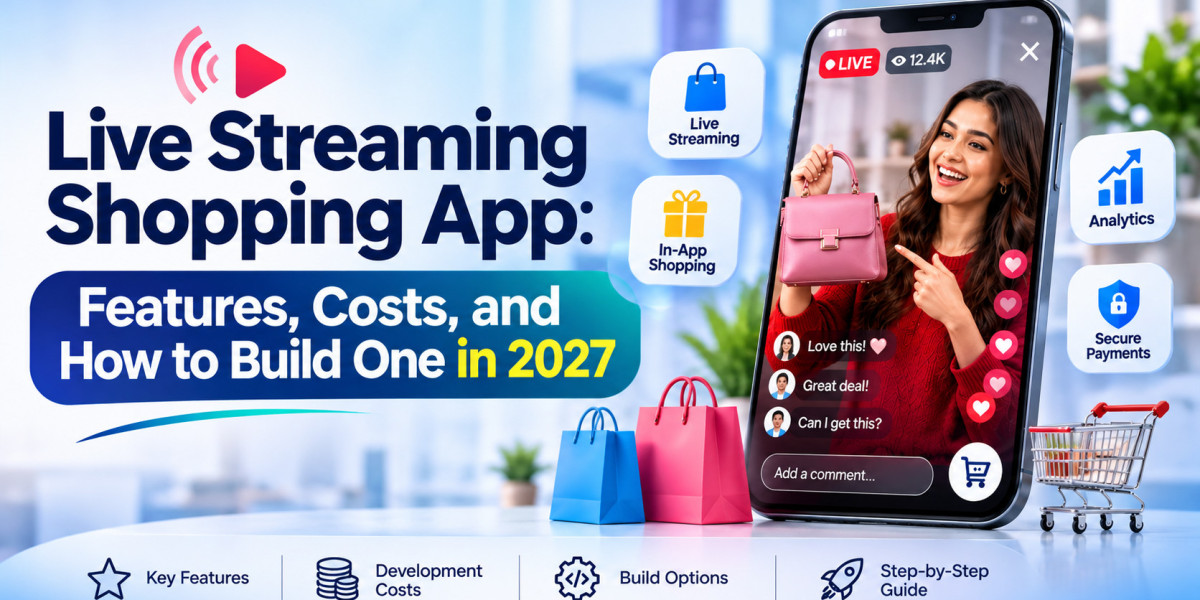

Online shopping has always been convenient, but it has rarely been entertaining. Product pages are static, reviews are hit or miss, and a shopper with a question usually ends up abandoning the cart. Live streaming shopping flips that experience. A host demonstrates a product on camera, answers questions in real time, runs limited-time offers, and viewers buy with a single tap without leaving the stream. It feels less like browsing a catalog and more like standing at the counter of a great store.
That shift is why brands, marketplaces, and independent sellers are paying close attention to the format. Building a reliable platform, however, takes more than adding a video player to an online store. If you are weighing a build, working with an experienced live streaming shopping app development service can help you avoid the technical and commercial mistakes that sink early products. This guide covers how live shopping apps work, the features that matter, the technology underneath, the build process, costs, and how to grow once you launch.
What Is a Live Streaming Shopping App?
A live streaming shopping app combines three things in one experience: real-time video, an interactive audience, and a built-in checkout. Sellers or hosts broadcast live, tag products in the stream, and viewers can chat, react, bid, and purchase without switching screens.
The format spans several styles. Some platforms focus on auction-style selling, where viewers bid in real time on collectibles, fashion, or one-of-a-kind items. Others emphasize flash-sale demonstrations, where a host shows a product, explains it, and offers a time-limited discount. Beauty brands use live tutorials, fashion labels run virtual showrooms, and food and grocery sellers show freshness and preparation. Despite the variety, the core mechanics are the same: low-latency video, instant interaction, and frictionless payment.
Why Live Commerce Is Growing
Several forces explain the momentum. Shoppers increasingly want trust before they buy, and watching a real person handle a product builds more confidence than a polished photo. Live interaction also creates urgency. A countdown timer, a dwindling stock counter, or a host announcing "only ten left" gives viewers a reason to act now instead of later.
For sellers, the economics are attractive. Live sessions tend to produce higher engagement than static listings, and a single stream can be repurposed into short clips, replays, and social content that keep selling long after the broadcast ends. Creators and influencers add another layer, since their audiences already trust them and follow them from stream to stream. For platform owners, a live shopping app is also a strong retention tool: people come back for the scheduled drops and the personalities, not just the products.
Who Should Build a Live Shopping App?
Not every business needs its own platform, but several types benefit most. Established ecommerce brands can add live selling to their existing store and own the customer relationship end to end. Marketplace founders can launch a multi-seller platform where independent hosts stream and the platform earns a commission. Retail chains and direct-to-consumer labels can use live sessions for product launches and exclusive drops. Creator networks can give their influencers a branded commerce channel rather than sending followers to third-party sites.
The key question is control. Selling inside a large social platform means sharing the audience, the data, and the margin. A dedicated app gives you your own customer data, your own brand experience, and your own revenue model.
Must-Have Features of a Live Streaming Shopping App
A strong product serves three audiences: shoppers, sellers or hosts, and administrators. Each needs a purpose-built experience.
Shopper Features
Shoppers want to find, watch, and buy with minimal effort. The essentials include sign-up with social or phone login, a home feed that surfaces live and upcoming streams, search and category browsing, a live player with real-time chat and reactions, product cards that pop up during the stream, one-tap checkout with saved payment methods, order tracking, and push notifications when followed hosts go live. Wishlists, reminders for scheduled streams, and shareable stream links help bring friends into the experience.
Seller and Host Features
Hosts need tools that make going live easy and selling effective. These include a simple go-live flow from mobile or from professional streaming software, a product catalog manager, the ability to pin products and change prices on the fly during a broadcast, scheduling for upcoming shows, live sales analytics, order and shipping management, and payout tracking. Features such as multi-host streams, guest invites, and giveaways add variety and keep audiences engaged.
Admin Features
The admin panel is where the platform owner stays in control. It should handle seller onboarding and verification, commission and fee settings, content moderation, dispute and refund management, promotional campaigns, user management, and analytics across traffic, conversion, and revenue. A kill switch for streams that violate policy is a practical necessity for any live platform.
Engagement Features That Drive Sales
Beyond the basics, interactive features are what separate average platforms from ones people love. Live auctions, flash deals with countdown timers, virtual gifts, polls, loyalty points, and member-only streams all deepen engagement. Replays with shoppable product tags let people buy after the broadcast ends, extending the value of every session.
Technology Stack and Architecture
Live commerce is one of the more demanding app categories technically, because it must deliver real-time video, real-time chat, and real-time transactions simultaneously, often to thousands of viewers at once.
Video streaming. Latency is the most important variable. If the host answers a question ten seconds late, the moment is lost and the sale with it. Modern platforms use WebRTC for ultra-low-latency interaction and adaptive streaming protocols to maintain quality across varying network conditions. A content delivery network distributes the stream globally, while transcoding adjusts quality per device.
Real-time messaging. Chat, reactions, bids, and product updates require a messaging layer that can handle bursts of activity. WebSocket-based systems paired with scalable message queues are common choices.
Backend and database. A modular backend built on services written in languages such as Node.js, Python, or Java keeps different functions separate and easier to scale. Relational databases manage orders and users, while caching layers speed up product and session data.
Mobile front end. Native apps for iOS and Android deliver the smoothest video and gesture performance, while cross-platform frameworks such as Flutter and React Native can lower cost and speed up delivery. Choosing the right approach depends on your budget, timeline, and performance needs, and this is a decision where an experienced mobile app development agency can give practical guidance based on similar projects.
Payments and security. Integrate trusted payment gateways that support cards, wallets, and regional payment methods, and ensure the flow meets industry security standards. Encryption, secure authentication, and fraud monitoring protect both buyers and sellers.
Cloud infrastructure. Live events create unpredictable traffic spikes. Cloud hosting with auto-scaling lets you handle a viral stream without overpaying for idle capacity the rest of the week.
Step-by-Step Process to Build a Live Shopping App
1. Define your model and audience
Decide whether you are building a single-brand app, a multi-vendor marketplace, or a creator-led platform. Identify your product categories, target shoppers, and the hosts you plan to attract. This choice drives every later decision.
2. Plan your MVP
Start with the features required to run a complete live sale: user accounts, live streaming, chat, product tagging, checkout, order management, and a basic admin panel. Save advanced features such as auctions, gifting, and AI tools for later releases once you see how people use the product.
3. Design for speed and simplicity
Live shopping happens fast. Viewers should be able to understand what is on sale and buy in seconds. Design the player screen so product cards, the buy button, and chat are all easy to reach, and test prototypes with real users before development begins.
4. Build and integrate
Development usually begins with the streaming and messaging core, since everything else depends on it. Then the shopper app, seller tools, and admin panel come together alongside payment, shipping, and notification integrations.
5. Test under real conditions
Load testing is essential. Simulate thousands of concurrent viewers, flaky mobile networks, simultaneous bids, and payment failures. Test across devices and operating system versions, and check that streams recover gracefully from interruptions.
6. Prepare compliance and moderation
Set up content policies, age restrictions where needed, data protection practices, and moderation workflows. Live content is hard to police after the fact, so combine automated filters with human moderators and clear reporting tools.
7. Launch with a seed community
Do not launch to an empty room. Recruit a handful of strong hosts, schedule a calendar of events, and invite an initial audience. Early streams set the tone and teach you what to improve.
Cost and Timeline
The budget for a live streaming shopping app varies widely based on scope, platforms, customization, and team location. A focused MVP with essential features typically takes a few months to build, while a full-scale marketplace with advanced engagement tools, analytics, and multi-region infrastructure can take six months or more.
The biggest cost drivers include the number of platforms you support, the complexity of the streaming infrastructure, the depth of seller and admin tools, the number of third-party integrations, and the level of custom design. Do not overlook running costs. Video streaming bandwidth, cloud hosting, payment processing fees, moderation, and ongoing maintenance continue after launch and grow with your audience. Ask any development partner to separate one-time build costs from recurring operating costs so you can plan realistically.
Some businesses choose a ready-made or white-label foundation to speed up launch, then customize it to their brand. Others build fully custom from scratch for maximum control. Neither path is automatically better; the right choice depends on how unique your requirements are and how quickly you need to enter the market.
Monetization Models
A live shopping platform can earn in several ways, and most successful ones combine more than one. Commission on each sale is the most common model, typically a percentage of order value. Seller subscriptions can unlock premium tools, analytics, or featured placement. Sponsored streams and in-app advertising let brands pay for visibility. Premium memberships can give shoppers early access to drops and exclusive shows. Virtual gifting allows viewers to tip hosts, with the platform taking a share. Finally, value-added services such as fulfillment, payment processing, and promotional tools can add steady secondary income.
Growth and Retention Tips
Launching is only the beginning. Sustained growth comes from making both sides of the marketplace successful. Help hosts improve by sharing performance data and best practices, such as stream length, pricing strategy, and timing. Keep a consistent schedule so shoppers know when to return, and use notifications to remind them of upcoming shows. Repurpose replays and clips on social channels to attract new viewers. Reward loyal shoppers with points, early access, and exclusive offers, and respond quickly to support issues, since trust is central to buying in real time.
Finally, measure what matters. Track average watch time, chat activity, conversion rate per stream, repeat purchase rate, and return rates by seller. These numbers reveal which hosts, products, and formats are worth investing in.
Common Mistakes to Avoid
A few pitfalls appear repeatedly. Underestimating latency and scalability leads to laggy streams that frustrate viewers. Building too many features before launch delays the product and hides what users actually want. Ignoring moderation exposes the platform to policy and brand risks. Neglecting host success means streams are dull and sales stay low. And launching without a plan to attract hosts and shoppers leaves a technically sound product with nobody using it.
Final Thoughts
Live streaming shopping turns buying into a shared, real-time experience, and that is exactly why it works. Shoppers get trust and entertainment, sellers get engagement and conversion, and platform owners get a channel they fully control. The opportunity is real, but the execution has to be strong: low-latency video, seamless checkout, dependable infrastructure, and a community of engaging hosts.
Start small with a focused MVP, validate it with real streams, and expand features based on actual behavior. With a clear model, the right technology choices, and a capable development partner, a live shopping app can become a durable growth engine for your brand or marketplace.